Colour differences between luminaires: binning and colour temperature
Two 4000K luminaires from two deliveries, and still one segment of the light line looks warmer than the next. Here is where that difference comes from, what binning and MacAdam ellipses mean, and how to avoid it when re-ordering.
Same kelvin figure, different white
The complaint is nearly always the same: the installation has been extended or a few luminaires have been replaced, and now the client sees a difference. In an office it shows in a continuous light line on a white ceiling: one segment looks slightly yellower, the next slightly bluer or even faintly pink. In a hall with high bays at 8 to 12 metres you see it on the floor as patches of a marginally different tint. Outdoors it shows along a street where every third column gives a different white.
The packaging says 4000K on all of them. That figure is correct, and yet it tells you less than you think. Colour temperature is a single number for a colour that actually needs two coordinates.
What kelvin does not tell you
Colour temperature only describes where a light colour sits on the line from warm to cool. The nominal value 4000K is a class, not a measured value: depending on the standard applied, that class can span roughly 3,700 to 4,300 K. Two luminaires that are both correctly labelled 4000K can therefore be several hundred kelvin apart.
More important still is the deviation across that line. A light colour can sit above the black body line (greenish) or below it (pinkish) at exactly the same kelvin value. It is precisely this green-to-pink deviation that the eye notices most, and it appears nowhere on the box. Colour rendering adds to it: a luminaire with Ra 80 and one with Ra 90 give a different picture on coloured surfaces at the same colour temperature, especially on reds and skin tones.
Binning and MacAdam ellipses
An LED manufacturer cannot steer the colour of a chip to the nanometre. After production the chips are therefore measured and sorted by luminous flux, voltage and colour point. That sorting is called binning. The smaller the bin, the more expensive the chip, because a larger share of the production falls outside the narrow limits.
The size of such a colour bin is expressed in MacAdam ellipses, usually shown in datasheets as SDCM (standard deviation of colour matching). A 1-step ellipse is the area within which a trained eye under laboratory conditions can just about not see a difference. In practice these rules of thumb apply:
- 1 to 2 SDCM: indistinguishable, even side by side. Usually only needed for museums and colour-critical workplaces.
- 3 SDCM: barely visible side by side in a single light line. A commonly specified requirement for offices, retail and healthcare.
- 5 SDCM: invisible within one luminaire, but visible between two luminaires on a white ceiling. Common in hall and outdoor lighting.
- 7 SDCM: clearly visible. That is roughly the width of an entire nominal kelvin class.
A luminaire with 5 SDCM is therefore not a poor product. Two bins from two deliveries can, however, sit on opposite sides of the target point and then add up to a difference everyone can see.
The causes in practice
Usually it is not one factor but a combination. Work through this list before rejecting a luminaire:
- Two production runs. The re-order comes from a later batch with a different chip bin or a new generation of LED module. Same article number, different colour point.
- Mixed series. A UFO high bay next to a linear luminaire from another series, both 4000K, almost always shows a difference.
- Wrong setting. On luminaires with selectable colour temperature, such as the post-top luminaires of POLARIS with 2200, 3000 and 4000K, one unit is simply set differently.
- Ageing. After a few years the colour point of an LED shifts slightly and a polycarbonate cover yellows. One new luminaire among old ones then looks cooler and brighter.
- Different optic or diffuser. An opal cover mixes the light differently from a clear lens, even with identical LEDs.
- Dimming level. At low dimming levels the colour point shifts a fraction. Two groups at different dimming levels show that as a tint difference.
How to avoid it when re-ordering
Colour difference is cheaper to prevent than to fix. These arrangements cost nothing extra:
- Order the whole project in one go, including 3 to 5 percent spares from the same delivery. Keep those spares aside with a project label.
- Specify the tolerance in the specification or quotation request: a maximum of 3 SDCM for offices and retail, a maximum of 5 SDCM for halls and outdoors.
- Keep the order number and production date of the luminaires. Quote them with every re-order, so it can be checked whether the same run is still available.
- Top up per zone, not per luminaire. If a re-order comes from a different run, install it in its own room, corridor or racking aisle. Nobody sees a difference between two rooms; everyone sees a difference within one light line.
- Replace at end of life per row or per room, not unit by unit.
- Check the setting of every luminaire with selectable colour temperature before it goes up.
Where a difference is acceptable and where it is not
The closer the luminaires are together and the whiter the surroundings, the stricter you need to be. A seamlessly linked light line from LINEA on a white office ceiling tolerates no visible difference: the segments touch and the viewer sits 2.5 metres below at 500 lux on the desk. Here 3 SDCM from a single delivery is the only safe choice.
High bays from ATRIA hang at 8 to 12 metres with metres of spacing. A 5 SDCM difference is still noticeable on the floor, but rarely perceived as disturbing, certainly on grey concrete at 200 to 300 lux. Outdoors, along a street with VIA luminaires at 25 to 35 metre spacing, the surroundings are dark and the eye compares less directly. Mix 2700K with 3000K there and you will see it: that is no longer a bin difference but a different class.
Frequently asked questions
Two luminaires from the same box already give a different white. Is that a defect?
Not necessarily. Within a 5 SDCM bin a slight tint deviation between units is permitted. If the difference is disturbing in a light line, have the colour point measured and compare it with the stated tolerance.
Is colour difference covered by the warranty?
Warranty covers material and manufacturing defects. A difference within the specified SDCM tolerance is not a defect. If a luminaire measures outside that tolerance or the colour shifts strongly within a few years, contact us with the measurement data.
Can I hang a three-year-old luminaire next to a new one?
Preferably not in the same light line. Group the new units together in one zone and move an old luminaire if needed. That way any difference stays behind a wall or in another row.
How do I measure a colour difference objectively?
With a spectrometer or colorimeter that records the x and y coordinates, at the same dimming level and after half an hour of warm-up. A photo with a fixed white balance is useful to show the difference, but does not count as a measurement.
What does 3 SDCM on a datasheet mean?
That the colour point of every unit lies within a 3-step MacAdam ellipse around the target point. Side by side that is barely visible. It is a commonly specified requirement for offices and retail.
Planning an extension or a re-order? Quote your original order number with your quotation request and we will check whether delivery from the same production run is possible. See also the light lines of LINEA and the high bays of ATRIA.
Read also
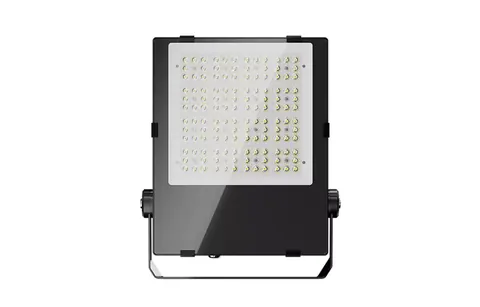 Knowledge
LED lighting before year end: KIA, EIA and planning for Dutch businesses
Many companies replace their lighting in the last months of the year. What the Dutch small-scale investment allowance (KIA) and energy investment allowance (EIA) can mean, what to watch out for and how to have the luminaires on site in time.
28 October 2026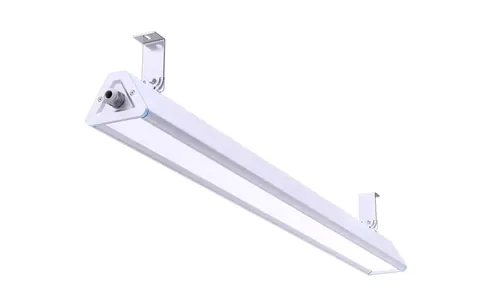 Worked examples
Worked example: a 4,000 m² warehouse from fluorescent to LED high bay
A fictional hall of 80 by 50 metres, 10 metres high, 200 lux required. Step by step we work out how many 150 W UFO high bays are needed, what that saves per year in kWh compared with fluorescent, and what sensors add on top.
8 October 2026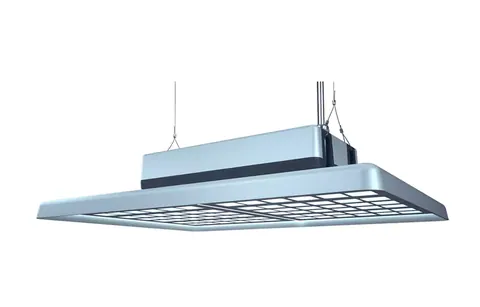 Knowledge
UFO or linear high bay: which one for your warehouse or hall
A high bay comes as a round UFO, as a linear luminaire above the racking aisle and as a flat panel with UGR<21. Which one you choose depends on mounting height, racking and the work done in the hall. This article gives the selection rules and a worked example for the number of luminaires.
8 October 2026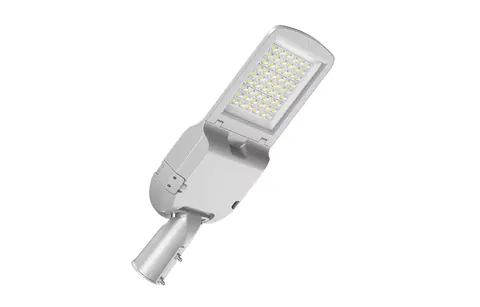 Knowledge
3000K, 4000K or 5000K: choosing colour temperature by application
Kelvin decides whether light looks warm, neutral or cool, and with it whether a street feels comfortable and a warehouse works well. We set out the right colour temperature for each application.
7 October 2026