3000K, 4000K or 5000K: choosing colour temperature by application
Kelvin decides whether light looks warm, neutral or cool, and with it whether a street feels comfortable and a warehouse works well. We set out the right colour temperature for each application.
What kelvin tells you about light, and what it does not
Colour temperature is expressed in kelvin (K) and describes the tint of white light. A low value such as 2700K looks warm and yellowish, 4000K is neutral white and 5000K or above tends towards cool, slightly bluish white. The scale is derived from the colour a glowing object takes on at that temperature, hence the name.
Kelvin says nothing about the amount of light. That is the luminous flux in lumens and, on the task area, the illuminance in lux. Nor does kelvin say anything about colour rendering: two 4000K luminaires can have very different colour rendering indices (Ra, also called CRI). For indoor workplaces Ra 80 is the usual minimum. So always select on three values at once: kelvin, lumens and Ra.
Warm, neutral or cool: the three standard values
- 2200K to 3000K, warm white: calm and inviting. Suits residential areas, hospitality, parks and anywhere light nuisance matters.
- 3500K to 4000K, neutral white: the usual choice for workspaces. Offices, shops, warehouses and public spaces where recognising faces matters.
- 5000K to 6500K, cool white or daylight white: high contrast. Suits inspection work, sports pitches and large yards, but quickly feels harsh indoors.
An LED luminaire often delivers slightly more lumens per watt at a higher kelvin value, because less phosphor is needed to warm up the blue light from the chip. The difference is a few per cent and is no reason to pick an unsuitable light colour.
Outdoors: residential streets, parks and business parks
In residential streets 3000K is now a common choice. The light is warm enough not to intrude into bedrooms and neutral enough to recognise faces and colours well. In nature areas, along woodland or water and in municipalities with a dark-sky policy the preference shifts to 2700K or even 2200K: the share of blue light is then low, which spares insects, bats and the sleep of residents.
We supply the VIA street luminaires in warm white (2700K), tiltable on a 60 mm column and with 10 kV surge protection. That keeps you on the safe side for residential streets and green areas. For parks and housing estates the POLARIS post-top luminaire is practical: colour temperature and output are adjustable on site to 2200K, 3000K or 4000K, so one article serves both a quiet park path and a busier square.
On business parks, car parks and charging plazas 4000K is customary. There, visibility on camera footage and recognition of vehicles and people outweigh ambience.
Indoors: offices, warehouses and production halls
For offices 4000K is the safe choice. It matches the daylight through the windows and keeps people alert. The European workplace lighting standard gives 500 lux on the desk as a guide value for office work, with a glare rating UGR below 19. The colour temperature is free within that, but 3000K soon looks dim in an office and 5000K clinical.
In warehouses and production halls you are well served with 4000K to 5000K. For order picking, quality control and reading labels and screens, the higher contrast of 5000K helps. Where people work under the luminaires all day, such as in assembly, 4000K is more comfortable. The ATRIA high bays come as standard in 4000K and reach up to 180 lm/W. The flat version with UGR<21 is intended for halls where glare is an issue, the linear version for narrow aisles above racking.
Guide values for illuminance in halls: 100 to 200 lux in storage areas without continuous occupation, 300 lux in aisles where picking takes place and 500 lux or more at workstations for assembly or inspection. A lighting calculation shows whether you reach those values with the chosen mounting height and luminaire.
Livestock buildings and sports pitches
In livestock buildings light plays a part in welfare and yield. For dairy sheds 4000K to 5000K is often chosen, with a high light level during the day and a separate, dimmed night light. Poultry houses are more demanding: there, dimming and a specific spectrum are used, so agree the lighting plan with the barn equipment supplier. Because barns are damp, dusty and contain ammonia, the housing matters at least as much as the kelvin value: choose IP65 or higher, and IP69K where high-pressure cleaning is used, such as the TRIVO linear luminaires.
On sports pitches 5000K is customary. The cool, high-contrast light makes the ball and the lines stand out, also on camera. For tennis and padel courts in residential surroundings 4000K is sometimes chosen to limit spill towards neighbours. Uniformity and the shielding of the luminaire matter more there than the exact light colour.
Comfort, light nuisance and the surroundings
The higher the kelvin value, the larger the share of blue light. Blue light scatters more strongly in the atmosphere and in the eye, so cool light is perceived as glaring sooner and contributes more to sky glow. It can also suppress the production of melatonin, which is unwelcome for residents in the evening and at night. That is why many municipalities and estate managers choose 3000K or lower in public spaces.
Three practical rules:
- Outdoors in residential and natural surroundings: 3000K or lower, well shielded and preferably dimmed after midnight via AstroDIM or DALI-2.
- Indoors where people work: 4000K as the default, 5000K only where contrast is decisive.
- Everywhere: keep the colour temperature the same within one room or street. A mix of 3000K and 4000K looks untidy and generates complaints.
In doubt? An adjustable luminaire prevents wrong orders: you set the light colour on site and the client sees the result straight away. Lichtplein supplies businesses only; all prices are excluding VAT. With a business account you order on invoice.
Frequently asked questions
Is 4000K the same as daylight?
No. Daytime daylight sits around 5500K to 6500K. 4000K is neutral white and looks most natural alongside daylight through the windows, without becoming clinical.
Can I combine 3000K and 4000K in one street?
Preferably not. The difference is clearly visible and residents report it as a fault. Replace per street or per road section in one go, or choose an adjustable luminaire such as the POLARIS.
Does 5000K give more light than 3000K?
At the same wattage a cooler luminaire usually delivers a few per cent more lumens. It appears brighter because of the higher contrast, but the illuminance in lux is almost the same.
Which colour temperature for a car park?
4000K is customary: good recognition of people and vehicles, also on camera. Also choose at least IP65 there and preferably luminaires with a sensor, so that empty bays are dimmed.
Can the colour temperature be changed afterwards?
Only with luminaires built for it, such as the POLARIS post-top with adjustable colour temperature. With a fixed luminaire the light colour is set and you would have to replace the luminaire.
Want certainty about kelvin, lux and uniformity for your project? Request a lighting calculation or go straight to the VIA street luminaires and the ATRIA high bays.
Read also
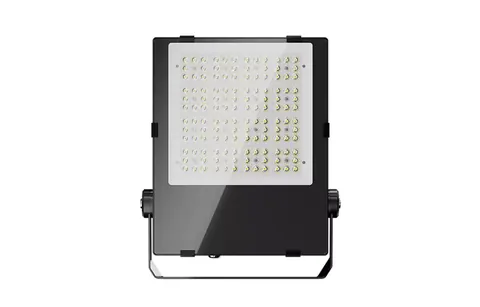 Knowledge
LED lighting before year end: KIA, EIA and planning for Dutch businesses
Many companies replace their lighting in the last months of the year. What the Dutch small-scale investment allowance (KIA) and energy investment allowance (EIA) can mean, what to watch out for and how to have the luminaires on site in time.
28 October 2026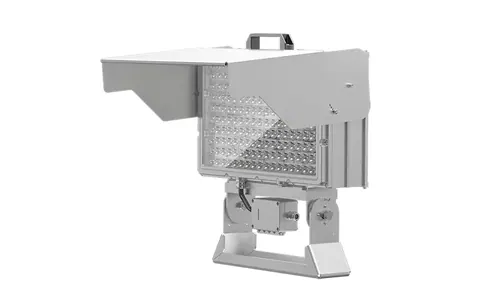 Knowledge
Site lighting for the dark months: checklist for business sites and car parks
Once the clocks go back it is dark by half past four, and the first and last hour of the working day happen in the dark. How to check your outdoor lighting now, fill the gaps and have the luminaires on site before the shortest days.
25 October 2026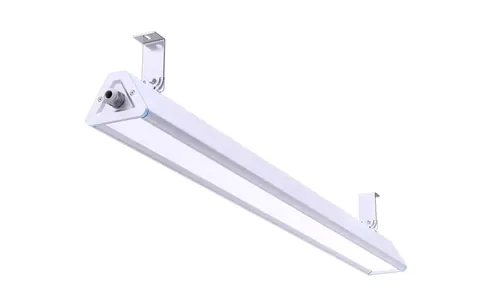 Worked examples
Worked example: a 4,000 m² warehouse from fluorescent to LED high bay
A fictional hall of 80 by 50 metres, 10 metres high, 200 lux required. Step by step we work out how many 150 W UFO high bays are needed, what that saves per year in kWh compared with fluorescent, and what sensors add on top.
8 October 2026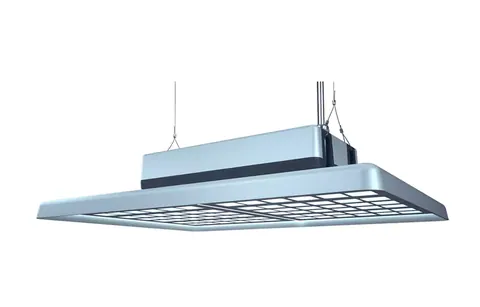 Knowledge
UFO or linear high bay: which one for your warehouse or hall
A high bay comes as a round UFO, as a linear luminaire above the racking aisle and as a flat panel with UGR<21. Which one you choose depends on mounting height, racking and the work done in the hall. This article gives the selection rules and a worked example for the number of luminaires.
8 October 2026