UFO or linear high bay: which one for your warehouse or hall
A high bay comes as a round UFO, as a linear luminaire above the racking aisle and as a flat panel with UGR<21. Which one you choose depends on mounting height, racking and the work done in the hall. This article gives the selection rules and a worked example for the number of luminaires.
Three housings, three jobs
An LED high bay comes in three housings and each one solves a different problem. The UFO high bay is round and compact, hangs from a single suspension point and gives a wide, symmetrical beam. The linear high bay is elongated and has an asymmetrical 30x90 degree beam that keeps the light in the aisle. The flat high bay with UGR<21 is a flat panel with a controlled light distribution for spaces where people look upwards or work with screens.
You will find all three in our ATRIA range: outputs from 75 to 240 W, IP65, up to 180 lm/W and a 5 year warranty, delivered from European stock. The choice comes down to three questions: how high is the luminaire mounted, is there racking underneath, and what do the people in the hall actually do?
UFO high bay: the all-rounder for open floors
An open warehouse floor, a production hall without tall racking or a loading bay: here the UFO is the obvious choice. A 100 W UFO delivers 15,000 lm, and the 180 lm/W version 18,000 lm at the same wattage. Across 200 luminaires that saves you light points or energy straight away.
The UFO is also quick to install: one eye bolt or bracket, one cable entry, done. The sensor-ready models have a socket for a plug-in presence sensor. In a warehouse with varying traffic the light then dims back automatically in empty zones, without separate control wiring.
Choose the UFO in these situations:
- Mounting heights of 6 to 15 metres, open floor or low racking
- Fast replacement of existing discharge luminaires on the same suspension points
- Presence detection per zone required, without a DALI installation
Linear high bay: light in the aisle, not on the racking
With tall racking a round beam wastes a large share of the light on the top shelves and in the racking structure. The linear high bay solves this with a 30x90 degree beam: narrow across the aisle, wide along it. The light lands in the aisle and on the face of the racking, exactly where the order picker reads and picks.
A linear ATRIA high bay of 100 W delivers 16,000 lm. Above a 3 metre wide aisle at 8 to 10 metres mounting height as a rule of thumb you space them every 4 to 6 metres, in line with the aisle. Mount them directly above the centre line of the aisle, otherwise the beam shifts towards one side of the racking. For lower spaces up to about 6 metres there is the linear low bay with a wider 90x110 degree beam, selectable from 14 to 75 W and with DALI.
Flat high bay with UGR<21: where people look upwards
In a sports hall everyone looks up at the ball. In an assembly hall people work with screens and shiny components. A standard UFO can cause disturbing glare there. The flat high bay has a 110 degree light distribution with a UGR below 21, within the UGR 22 limit that the European workplace lighting standard applies to much assembly and inspection work.
The 120 W flat model delivers 19,200 lm at 160 lm/W, is 0-10V dimmable and IK10 impact resistant. The latter is no luxury in a sports hall. Mount the panel with the matching mounting bracket from the range so that it sits flush against the ceiling or the trusses.
Matching mounting height and beam angle
The beam angle determines how far apart you can hang luminaires without dark patches on the floor. As a rule of thumb:
- 120 degrees: for heights of 4 to 7 metres, spacing up to about 1.5 times the height above the working plane
- 90 degrees: for heights of 7 to 12 metres, spacing roughly equal to that height
- Above 12 metres: 90 degrees with a higher output of 150 to 240 W instead of more luminaires
Fewer light points at height means fewer suspension points, less cable and less maintenance from an access platform. Factor that into the comparison: a heavier luminaire costs more per unit, but is often cheaper per square metre.
How many luminaires per square metre
The required light level follows from the task. As a guide: 100 to 200 lux for storage, 300 lux for order picking and packing, 500 lux for assembly and inspection, and 200 to 500 lux in a sports hall depending on the class of competition.
Worked example: an open warehouse of 2,000 m2 at 8 metres height, target 200 lux. With a 100 W UFO of 15,000 lm, a maintenance factor of 0.8 and a utilisation factor of 0.6 you need 2,000 x 200 / (0.8 x 0.6) = 833,000 lm, so 56 luminaires. That is roughly one UFO per 36 m2 in a 6 by 6 metre grid. With the 180 lm/W version of 18,000 lm that drops to 47 units.
This rule of thumb gives a first quantity for the quotation. Reflectance of walls and ceiling, the height of the racking and the position of columns determine the real result. For a project we therefore have a lighting calculation made: 350 euro excl. VAT, with a floor plan, lux levels per zone and a parts list you can order straight away.
Control: on and off, dimming, sensor or DALI
Not every hall needs the same control. A workshop is fine with on and off, a warehouse with varying occupancy benefits from a sensor per luminaire, and a new-build hall with a building management system calls for DALI.
- Non-dimmable: simplest connection and lowest price
- 0-10V or 1-10V: dimming per group via a control wire, can be linked to a daylight sensor
- Sensor-ready: plug-in sensor per luminaire, switches and dims without extra wiring
- DALI: individually addressable, suitable for building management and energy reporting
Frequently asked questions
Can I hang a UFO high bay above racking as well?
Above low racking up to about 3 metres, yes. With taller racking you lose too much light on the top shelves. Choose the linear high bay with a 30x90 degree beam instead, directly above the aisle.
Which colour temperature should I choose for a warehouse?
4000K is the standard for warehouses and production halls: neutral white, good legibility of labels and good contrast. The high bays in the ATRIA range are available in 4000K.
What is the maximum mounting height for a high bay?
As a rule of thumb, the UFO and linear models up to 240 W are suitable up to about 15 metres. Above that height you look at floodlights from the FLUX range, or you have a lighting calculation made.
Is IP65 necessary in a dry warehouse?
Not mandatory, but practical: dust, pressure washing at loading docks and condensation in unheated halls occur everywhere. The high bays in the ATRIA range are IP65 rated, so you do not need to select it separately.
What is the lead time and from how many units does project pricing apply?
Delivery from European stock within 5 working days. Project pricing applies from 100 units. Lichtplein sells to businesses only.
Browse all UFO, linear and flat high bays in the ATRIA range, or have us prepare a lighting calculation for your hall and request a quotation straight away.
Read also
 Knowledge
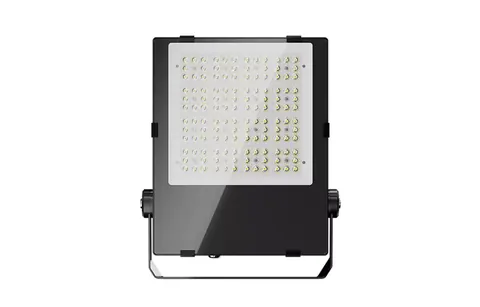
LED lighting before year end: KIA, EIA and planning for Dutch businesses
Many companies replace their lighting in the last months of the year. What the Dutch small-scale investment allowance (KIA) and energy investment allowance (EIA) can mean, what to watch out for and how to have the luminaires on site in time.
28 October 2026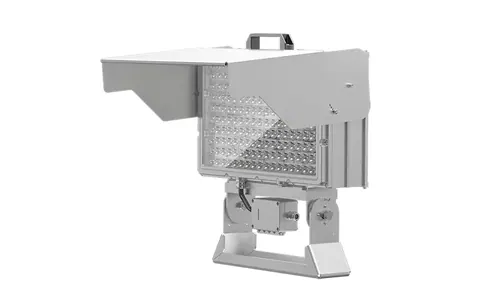 Knowledge
Site lighting for the dark months: checklist for business sites and car parks
Once the clocks go back it is dark by half past four, and the first and last hour of the working day happen in the dark. How to check your outdoor lighting now, fill the gaps and have the luminaires on site before the shortest days.
25 October 2026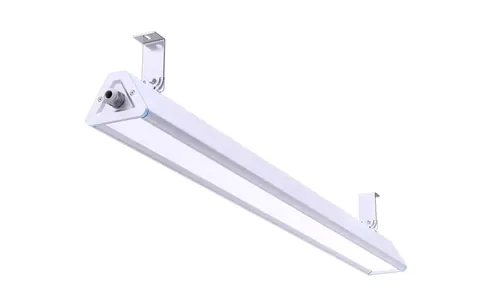 Worked examples
Worked example: a 4,000 m² warehouse from fluorescent to LED high bay
A fictional hall of 80 by 50 metres, 10 metres high, 200 lux required. Step by step we work out how many 150 W UFO high bays are needed, what that saves per year in kWh compared with fluorescent, and what sensors add on top.
8 October 2026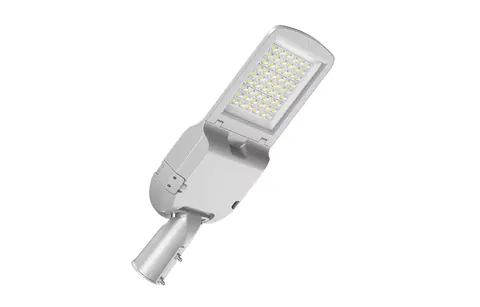 Knowledge
3000K, 4000K or 5000K: choosing colour temperature by application
Kelvin decides whether light looks warm, neutral or cool, and with it whether a street feels comfortable and a warehouse works well. We set out the right colour temperature for each application.
7 October 2026