Heereweg, Lisse: a classic lantern as the eye-catcher
On the Heereweg in Lisse, the main street of the bulb-growing village, classic lanterns with two light distributions and up to 4,500 lumens give a bright, calm streetscape. What a village centre needs in terms of light, and how you recreate it with the classic post-top luminaire from POLARIS.
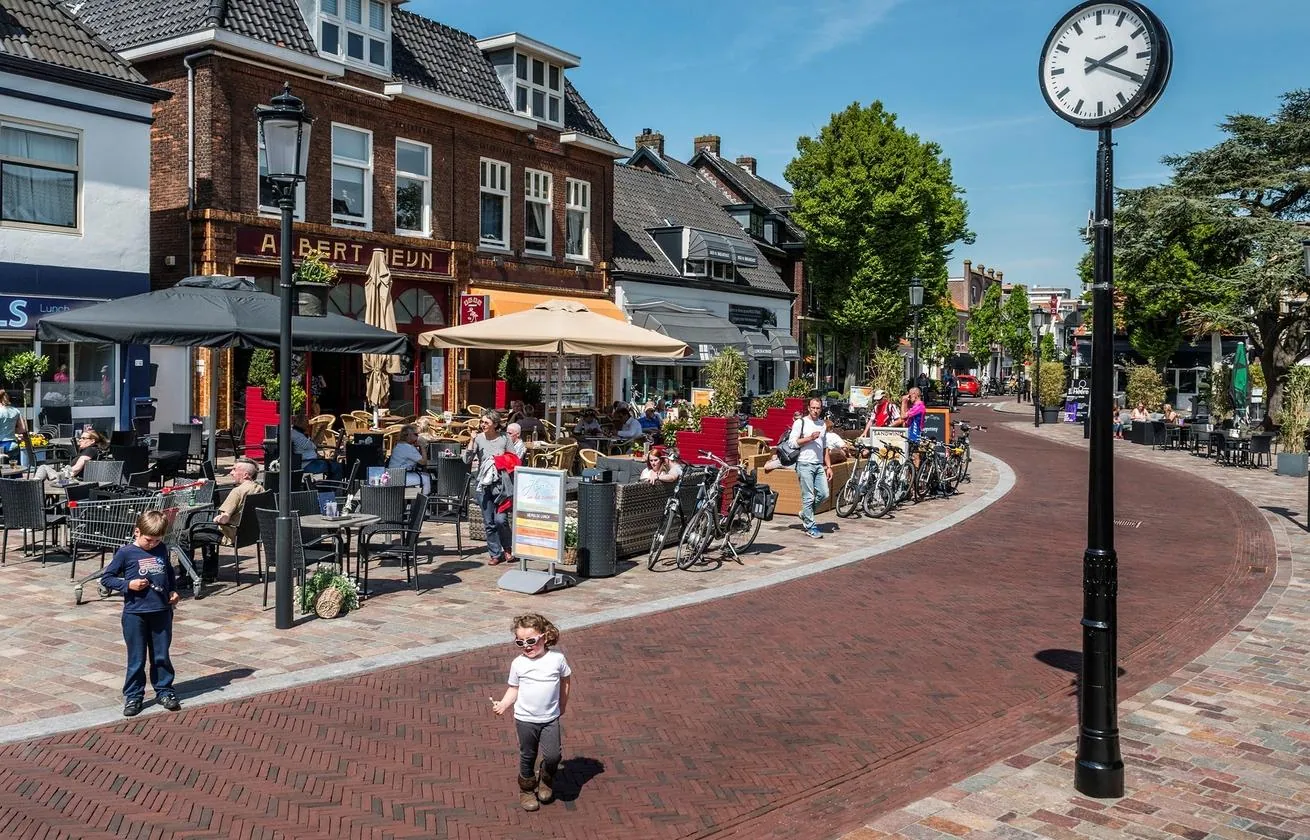
A village street with character
Lisse sits in the heart of the Dutch bulb region, between Haarlem and Leiden. The Heereweg runs through the village as one long axis: shops, cafés and homes alternate, and in the bulb season a great deal of visitor traffic joins them. A street like this needs lighting that looks right by day and simply does its job after dark.
The choice fell on a classic lantern: a recognisable canopy on a slender body that reads as street furniture in daylight. Not a modern road luminaire, but not a nostalgic lamp with poor efficiency either.
One luminaire, two light distributions
The lanterns on the Heereweg come in two light distributions. Along the carriageway, one version throws its light lengthwise down the street, so the columns can stand further apart without dark patches between them. On small squares, junctions and parking bays, a version with an all-round distribution lights the whole area evenly.
The luminous flux runs up to 4,500 lumens per luminaire: with suitable column spacing, enough for a village centre with mixed traffic, with margin to dim at night. Choose the light distribution so that the light lands on the street and not in the flats above the shops; that limits light nuisance.
What a village centre needs from its lighting
A shopping street with pedestrians, cyclists and cars usually falls into a higher class than a residential street under the Dutch practice guideline: as a rule of thumb an average of 7.5 to 10 lux, against 3 to 5 lux in a residential area. The road authority sets the exact class for each situation. Uniformity matters at least as much: large contrasts between light and dark feel unsafe.
For a classic lantern a light point height of 4 to 5 metres is usual. With 4,000 lumens at 4 metres, column spacing in practice lands between 15 and 25 metres, depending on the width of the profile and the class required. A lighting calculation on the actual column positions removes that uncertainty.
How to recreate it with POLARIS
Lichtplein did not carry out this project; it serves as a reference image. If you want the same look, the classic post-top luminaire from POLARIS is the match: 40 W, 4,000 lumens at 140 lm/W, 4000 K, IP66, a 120 degree beam, an 80 mm spigot and up to 5 years warranty. That is close to the level on the Heereweg.
You choose the column to go with it. TURRIS supplies conical steel columns of 4 and 6 metres from stock, hot-dip galvanised or additionally powder-coated in RAL 9005. If you prefer aluminium, look at CIVIS. A NEXUS cut-out box for one or two fuses fits in the door opening.
What to check when choosing
- Spigot. The classic POLARIS takes 80 mm, the modern versions 60 to 80 mm.
- Colour temperature. The classic version gives 4000 K; if you want warmer light, the modern POLARIS luminaires are adjustable from 2200 to 4000 K.
- Ingress protection. IP66 keeps out dust, rain and the pressure washer.
- Lead time. Luminaires within 5 working days from European stock, steel columns in 3 to 5 weeks, aluminium columns in 4 to 6 weeks. So order the columns first.
- Quantities. From 20 columns or 100 luminaires a project price applies. Lichtplein sells to businesses only.
Frequently asked questions
Did Lichtplein light the Heereweg itself?
No. The Heereweg serves here as an example of what a classic lantern does in a village centre. Lichtplein supplies the comparable classic post-top luminaire from POLARIS, columns and cut-out boxes to installers and municipalities.
Which light distribution do I choose: street or all-round?
Along a carriageway, choose a street distribution that throws the light lengthwise; on squares, junctions and parking bays, a symmetrical all-round distribution. You often combine both in one street.
How many lux belong in a shopping street?
Expect an average of 7.5 to 10 lux with good uniformity; in a residential street 3 to 5 lux is usual. A lighting calculation gives certainty on your own column spacing.
Does the classic POLARIS fit an existing column?
Yes, on an 80 mm spigot. Measure the existing spigot first; with a different diameter, a new column from TURRIS or CIVIS is usually the most practical solution.
How long does delivery take?
Luminaires within 5 working days from European stock, steel columns 3 to 5 weeks, aluminium columns 4 to 6 weeks. Aluminium columns and cut-out boxes are supplied on a project basis, price on request.
Browse the classic and modern post-top luminaires from POLARIS or request a quote for luminaires and columns in one go. Lichtplein sells to businesses only.
Read also
 Knowledge
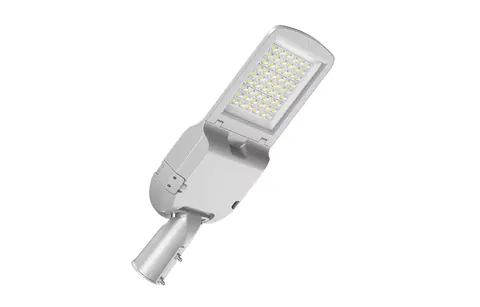
3000K, 4000K or 5000K: choosing colour temperature by application
Kelvin decides whether light looks warm, neutral or cool, and with it whether a street feels comfortable and a warehouse works well. We set out the right colour temperature for each application.
7 October 2026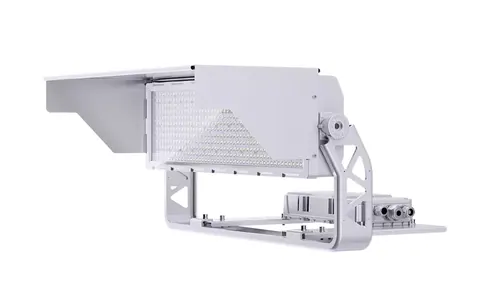 Troubleshooting
Vandalism and impact damage to outdoor lighting: how to limit the damage
Smashed luminaires, columns hit by vehicles and forced column doors cost far more than the product itself. Read which IK rating, mounting height, materials and column door closure limit the damage, and how to keep replacement costs down.
25 September 2026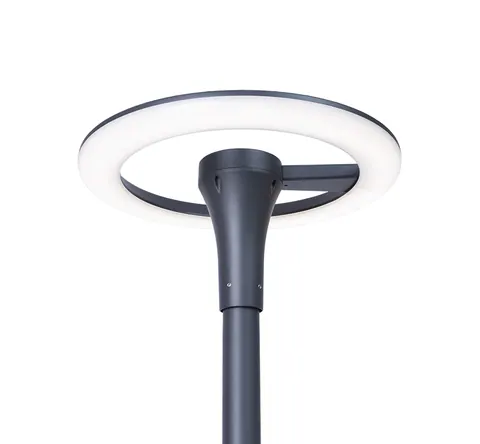 Knowledge
Post-top luminaire or street luminaire: the difference and where to use each
A post-top luminaire sits on top of the column and lights all round; a street luminaire mounts on a bracket or tilts on the column top and directs the light along the road. Here is how to choose the right type, column height and light distribution for your project.
24 September 2026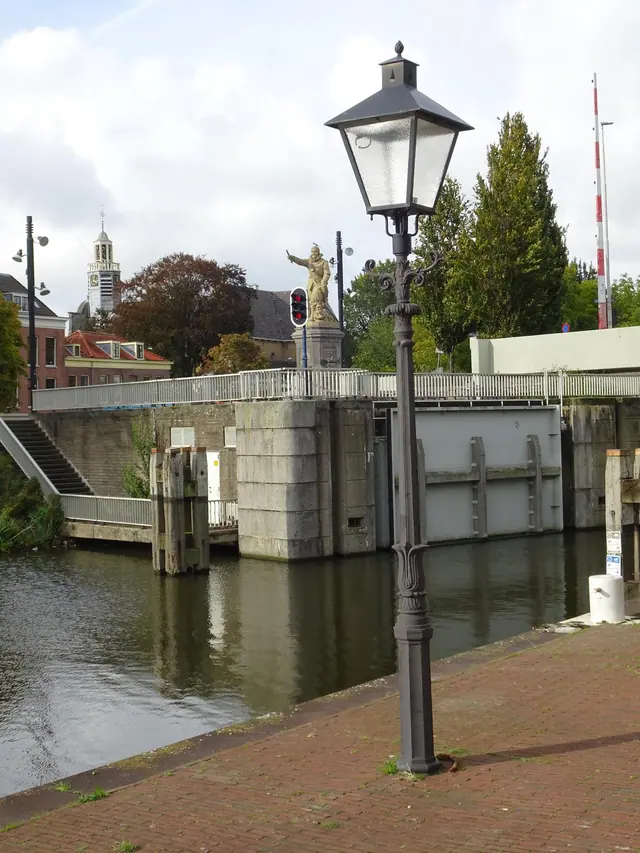 Projects
Delfshaven, Rotterdam: classic lanterns converted to LED without replacement
In historic Delfshaven, the classic municipal lanterns were converted to LED with a retrofit kit: same luminaire, same streetscape, a fraction of the consumption. What a retrofit involves, what to check and when replacement is the better choice.
10 September 2026