Vandalism and impact damage to outdoor lighting: how to limit the damage
Smashed luminaires, columns hit by vehicles and forced column doors cost far more than the product itself. Read which IK rating, mounting height, materials and column door closure limit the damage, and how to keep replacement costs down.
Where the damage comes from
Damage to outdoor lighting rarely has a single cause. In practice we see three groups: deliberate vandalism, accidental impacts and theft. Vandalism is a stone through the lens, a post-top luminaire pulled off its column, graffiti on the column or a forced column door. Impact damage happens by accident: a football against a floodlight in a school playground, a mower against a bollard or a lorry reversing into a column. Theft is mostly about copper: the cable inside the column and the connection box behind the door.
The cause determines the solution. A high IK rating helps against stones, the position of the column helps most against collisions, and a door that cannot be opened with a screwdriver helps against theft. So walk the site before you order any material: where do people gather, where do vehicles drive and what can be reached from the ground?
IK rating: the first choice
The IK rating from IEC 62262 states how much impact energy a housing withstands. IK08 stands for 5 joules, IK10 for 20 joules: a 5 kilo hammer falling from 40 centimetres. In practice IK10 is the highest rating manufacturers state for luminaires; for any higher claim, ask for the test report.
- Out of reach, quiet surroundings: IK08 is enough. The 25 W street luminaire from the VIA series on a 4 metre column is IK08.
- Within reach or within throwing distance: IK10. Think of underpasses, cycle shelters, school playgrounds, bus stops, sports grounds and car parks.
- Ball impact: IK10, even at 6 metres. That is why the padel and tennis court floodlights from the ARENA series are IK10.
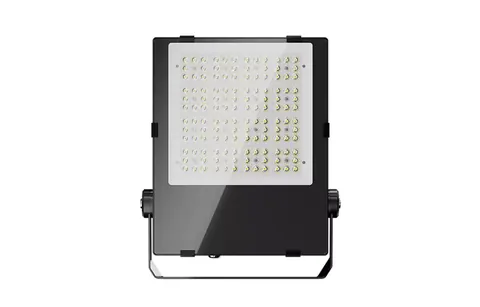
- Grounds and facades: within the FLUX series, choose the IK10 versions, such as the 240 W floodlight with 40,800 lumens.
The IK value applies to the housing and lens as tested; after a replaced cover it no longer applies automatically.
Mounting height and position
The cheapest protection is distance. What cannot be reached is vandalised less often. Use these rules of thumb:
- Below 2.5 metres a luminaire is within reach: always IK10, preferably with recessed screws with a special drive.
- A 4 metre column from the TURRIS series puts the light point out of reach, but not out of throwing range. On squares and at hangout spots, still choose IK10.
- A 6 metre column is much harder to hit with a stone and covers more area per column.
- Do not place columns next to fences, containers or benches that someone can climb on.
- Keep columns well behind the kerb and outside the turning circle of lorries; in car parks, an impact bollard protects the column from bumpers.
- Post-top luminaires from the POLARIS series often sit on lower columns, for example 3 to 4 metres with a 60 to 80 mm spigot, and are more exposed to knocks than street luminaires. Place them at least one metre from footpaths and mowing routes.
Guards, covers and materials
If the position cannot be chosen, the product has to do the work. Three parts count: housing, lens and fixing.
- Housing: die-cast aluminium takes knocks better than sheet steel and does not rust.
- Lens or cover: toughened glass is scratch-resistant and colour-stable, but shatters under a hard blow. Polycarbonate flexes and hardly ever breaks, but yellows without a UV stabiliser and scratches more easily. For vandalism-prone locations, polycarbonate or a guard in front of the glass is the better choice.
- Guard: a steel guard catches stones and balls before they reach the lens. It costs a few per cent of light output and should be included in the lighting calculation. Ask with your quotation whether a matching guard is available for the chosen type.
- Fixing: use stainless steel bolts with a non-standard drive, such as pin torx, and lock the bracket so the luminaire cannot be twisted by hand.
The conical steel columns from the TURRIS series are made of S235JR steel, hot-dip galvanised. A small dent in a galvanised steel column is usually cosmetic, whereas an aluminium column bends sooner. If you choose the additionally powder-coated version in RAL 9005, graffiti is easier to remove and scratches show less than on bare zinc.
Lockable columns and a secure door
The door is the weak point of every column. Behind it sit the connection box with fuses and the cable termination, exactly what copper thieves are after. An open door is also a safety risk: there is 230 V behind it.
- Choose a column whose door opens only with a tool or a special key, never with an ordinary screwdriver.
- Use a connection box from the NEXUS series, which fits the door of the TURRIS columns, so the fuse sits right at the column and a short circuit after damage does not switch off the whole street.
- Never leave cable hanging outside the column; bring it in underground.
- Record the key type at handover so your engineer can start straight away after a report.
What replacement really costs
The luminaire is rarely the biggest item in a replacement. Count the journey, an access platform, two engineers, traffic management where needed and disposal of the old material. For a column, add excavation and a new foundation. A post-top luminaire from the POLARIS series costs up to 385 euros excl. VAT, a steel column from the TURRIS series is priced on request, answer within 48 hours. The labour and equipment around that replacement are often a multiple of that.
This is how you keep costs under control:
- Choose IK10 and a guard up front in risk areas; the extra cost is small compared with a single replacement.
- Standardise on one series per site, so every spare luminaire fits every column.
- Keep a small spare stock. We deliver luminaires from European stock within 5 working days, but steel columns have a lead time of 3 to 5 weeks and aluminium columns 4 to 6 weeks. A light point that stays dark for weeks attracts further vandalism.
- Log every incident with a photo, date and location; that helps with insurance and shows where extra measures are needed.
Frequently asked questions
Is IK10 always necessary for outdoor lighting?
No. Out of reach and out of throwing range, IK08 is enough. Within 2.5 metres, in school playgrounds, at sports grounds and in underpasses, IK10 is the right choice.
Does the warranty cover vandalism damage?
No. Warranty covers manufacturing defects, not damage from knocks, stones or collisions. That damage falls under your own insurance or that of the party who caused it.
Glass or polycarbonate lens?
Polycarbonate hardly ever breaks and is the choice for locations within reach. Toughened glass stays clear and scratch-free for longer and suits mounting at height, if necessary with a guard in front.
Can a dented steel column stay in place?
A shallow dent without a crack in the zinc layer is usually cosmetic. With a kink, a deep dent or a damaged door opening, have the column assessed; it usually needs replacing.
Does a taller column help against vandalism?
Partly. A 6 metre column is harder to hit than a 4 metre one and also covers more area per column. Against collision damage, height does not help; there, the position of the column counts.
Want to light a site so it stands up to vandalism? Request a quotation with your site plan or have a lighting calculation made first, and we will take the IK rating and mounting height into account straight away.
Read also
 Knowledge
LED lighting before year end: KIA, EIA and planning for Dutch businesses
Many companies replace their lighting in the last months of the year. What the Dutch small-scale investment allowance (KIA) and energy investment allowance (EIA) can mean, what to watch out for and how to have the luminaires on site in time.
28 October 2026 Knowledge
Site lighting for the dark months: checklist for business sites and car parks
Once the clocks go back it is dark by half past four, and the first and last hour of the working day happen in the dark. How to check your outdoor lighting now, fill the gaps and have the luminaires on site before the shortest days.
25 October 2026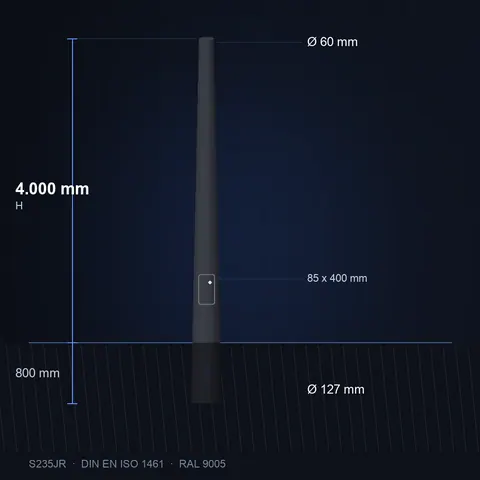 News
New: steel and aluminium lighting columns to the Dutch standard
Lichtplein now supplies conical steel lighting columns of 4 and 6 metres at a sharp price on request, plus aluminium columns of 3, 4 and 6 metres. With full dimensions on the product page, matching our street and post-top luminaires, delivered by truck.
8 October 2026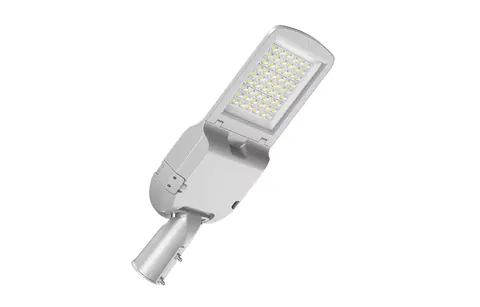 Knowledge
3000K, 4000K or 5000K: choosing colour temperature by application
Kelvin decides whether light looks warm, neutral or cool, and with it whether a street feels comfortable and a warehouse works well. We set out the right colour temperature for each application.
7 October 2026