The standard for office lighting: what EN 12464-1 requires
The current version of EN 12464-1 asks for more than 500 lux on the desk. Walls, ceiling, cylindrical illuminance, flicker and the non-visual effect of light all count. Here is what that means for your office and industrial projects.
What the standard covers
EN 12464-1 describes the lighting of indoor workplaces: offices, schools, healthcare, industry and retail. In the Netherlands it is published as NEN-EN 12464-1 and serves as the benchmark for the legal requirement of adequate lighting at work. Not a law, but the benchmark clients and consultants test a lighting design against.
The current version has been in force for several years and replaces the 2011 edition. The familiar lux values have largely stayed the same, but the standard now looks far more explicitly at the whole room rather than just the desktop.
The basics remain: 500 lux, UGR 19 and Uo 0.60
For writing, reading and screen work the standard requires a maintained illuminance of 500 lux on the task area, a glare rating of UGR 19 or lower, a uniformity Uo of at least 0.60 and a colour rendering Ra of at least 80. The immediate surroundings of the desk may drop to 300 lux and the background to 100 lux.
- Reception desks: 300 lux
- Meeting rooms: 500 lux
- Archives and storage: 200 lux
- Corridors and circulation areas: 100 lux
New: a required and a modified value
The current standard gives two values per task: the required illuminance and a higher, modified value. The higher value applies when circumstances demand it: the visual work is critical, errors are costly, contrast is low, the task takes a long time or the staff are older on average. For office work the value then rises from 500 to 750 or 1,000 lux.
In practice this means leaving headroom in the design. Luminaires with selectable output, such as the LINEA linear luminaires with 24, 32 or 40 W per module, let you adjust the level on site without adding light points.
Beyond the desktop: walls, ceiling and cylindrical illuminance
A room only looks bright when the surfaces around it are bright too. The standard therefore also sets minimums for the walls and ceiling: as a general minimum 50 lux on the walls and 30 lux on the ceiling, with higher values for offices, education and healthcare. Narrow-beam downlights alone will not get you there; an indirect component or a light line with an uplight module will.
The standard also pays attention to cylindrical illuminance: the light on a vertical plane at eye height, 1.2 metres for seated work and 1.6 metres for standing work. At least 50 lux across the room, and 150 lux where people need to see each other's faces, such as in meeting rooms and offices. That is what keeps faces looking natural.
Flicker and the non-visual effect of light
New in the current version are limit values for flicker (PstLM) and the stroboscopic effect (SVM). In practice that comes down to quality drivers and a dimming control that does not start pulsing at the lowest setting.
The non-visual effect of light has also found a place: light steers the day and night rhythm through the melanopic receptors in the eye. The standard sets no hard requirements here, but recommends using daylight and allowing higher illuminances at eye height during the day. A larger indirect component and a colour temperature of 4000 K are the usual answer in offices.
The same standard applies in the hall
EN 12464-1 does not stop at the office door. Workplaces in production and warehousing have their own values: rough assembly 200 lux, medium assembly 300 lux, fine assembly 500 lux and precision work 750 lux, with UGR limits from 25 down to 19 as the work gets finer. Storage rooms need 100 lux and manned gangways 150 lux.
Above workplaces in halls you therefore choose a luminaire with controlled glare, such as the flat ATRIA high bays with UGR<21, and above racking a linear version that keeps the light in the aisle.
Frequently asked questions
Is EN 12464-1 legally binding?
No, it is a standard. Working conditions legislation does require adequate and well-matched lighting, and the standard is the generally accepted benchmark for that. You may deviate from it, but you must be able to justify it.
Does 500 lux apply to the whole office?
No, only to the task area. The immediate surroundings may be 300 lux and the background 100 lux. Corridors and circulation areas need 100 lux.
When do I use the modified, higher value?
For critical tasks, low contrast, costly errors, long task duration or an older group of staff on average. Record that choice in the lighting design.
How do I check cylindrical illuminance?
A lighting calculation can include it on request. On site you measure with a lux meter held vertically at 1.2 metres in four directions and take the average.
Do I have to calculate melanopic values?
Not mandatory, in the standard it is a recommendation. For rooms without daylight or for shift work it is sensible to include higher illuminances at eye height and an adjustable colour temperature.
Want to be sure your design meets the current standard? Request a lighting calculation, or go straight to the LINEA linear luminaires for offices and the flat ATRIA high bays for the hall. Lichtplein supplies businesses only.
Read also
 Knowledge
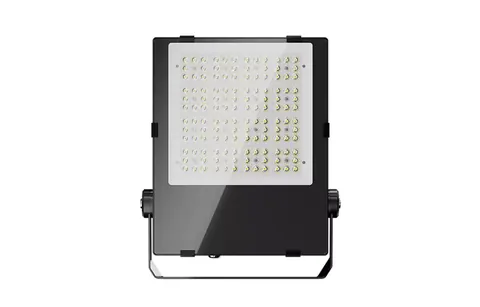
LED lighting before year end: KIA, EIA and planning for Dutch businesses
Many companies replace their lighting in the last months of the year. What the Dutch small-scale investment allowance (KIA) and energy investment allowance (EIA) can mean, what to watch out for and how to have the luminaires on site in time.
28 October 2026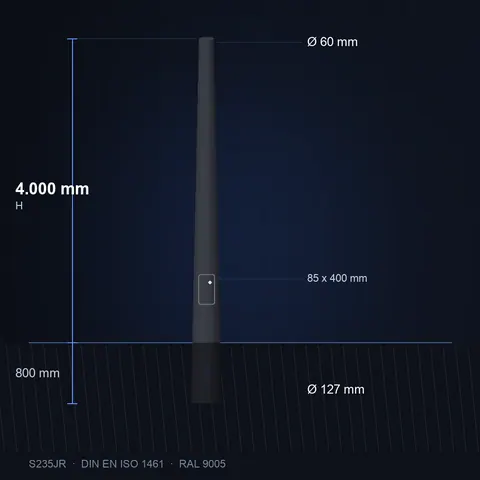 News
New: steel and aluminium lighting columns to the Dutch standard
Lichtplein now supplies conical steel lighting columns of 4 and 6 metres at a sharp price on request, plus aluminium columns of 3, 4 and 6 metres. With full dimensions on the product page, matching our street and post-top luminaires, delivered by truck.
8 October 2026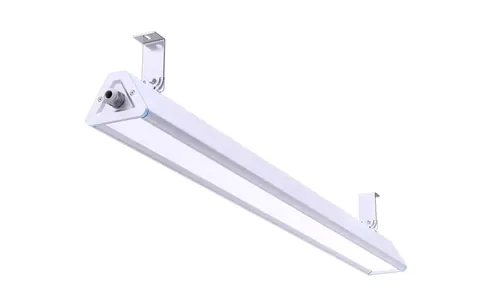 Worked examples
Worked example: a 4,000 m² warehouse from fluorescent to LED high bay
A fictional hall of 80 by 50 metres, 10 metres high, 200 lux required. Step by step we work out how many 150 W UFO high bays are needed, what that saves per year in kWh compared with fluorescent, and what sensors add on top.
8 October 2026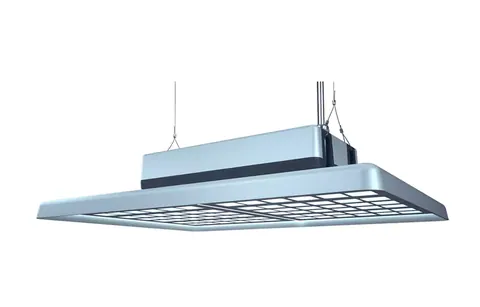 Knowledge
UFO or linear high bay: which one for your warehouse or hall
A high bay comes as a round UFO, as a linear luminaire above the racking aisle and as a flat panel with UGR<21. Which one you choose depends on mounting height, racking and the work done in the hall. This article gives the selection rules and a worked example for the number of luminaires.
8 October 2026