Worked example: car park with 12 columns of 6 metres
A fictional car park of 100 by 60 metres needs 20 lux from twelve steel lighting columns of 6 metres. We work out step by step how much light is required, which VIA street luminaires fit and what the complete bill of materials costs, indicatively.
The starting points
The site in this example is fictional but realistic: a car park of 100 by 60 metres (6,000 m²) next to a company building, in use until late evening, with lorry traffic at the loading docks. The client asks for an average illuminance of 20 lux, the guide value EN 12464-2 gives for car parks with heavy traffic. A quiet car park needs only 5 to 10 lux.
Fixed choices: twelve conical steel TURRIS columns of 6 metres in RAL 9005, VIA street luminaires on the 60 mm spigot and one NEXUS column cut-out with fuses per column. All prices exclude VAT; Lichtplein supplies businesses only.
Step 1: how many lumens are needed
The rule of thumb for an open area starts with area times required illuminance: 6,000 m² × 20 lux = 120,000 lumens that must actually land on the surface.
Two corrections follow. Part of the light falls outside the area or is lost in the optic; for a street luminaire with a wide road optic at 6 metres we use a utilisation factor of 0.5 in this example. The luminaire also gets dirty and its output drops slightly over the years: maintenance factor 0.8. Installed, you therefore need 120,000 / (0.5 × 0.8) = 300,000 lumens, or 25,000 lumens per column with twelve columns.
Step 2: the luminaires
The VIA range runs from 25 to 100 W at up to 160 lm/W, IP66, with 10 kV surge protection. Three variants side by side, each with the same factor of 0.4 (utilisation times maintenance):
- 1 × 50 W per column (LP-VI112, 20 to 50 W set by dip switch, 6,750 lm): 12 × 6,750 = 81,000 lm installed, about 5 lux average. Suitable for an overflow car park.
- 1 × 100 W per column (about 15,000 lm): 180,000 lm, about 12 lux. Meets the 10 lux for medium traffic.
- 2 × 100 W per column on a double bracket: 360,000 lm, about 24 lux. This is the variant that reaches the required 20 lux with a margin for soiling.
For this example we choose the third variant: 24 luminaires of 100 W, 2,400 W in total. Choose the version with DALI-2 or AstroDIM if the site may dim to 50 per cent after midnight; the extra cost of the driver can then pay for itself through lower consumption.
Step 3: column positions and uniformity
Twelve columns on 6,000 m² means 500 m² per column. A logical layout is three rows of four: the rows at 10, 30 and 50 metres from the long side, the columns at 12.5 / 37.5 / 62.5 / 87.5 metres. The 25 metre spacing is a good four times the mounting height, which we treat as the practical upper limit for a road optic at 6 metres.
That is exactly why a rule of thumb is not enough. The average is right, but the uniformity Uo (minimum divided by average) must be at least 0.25 for a car park, and only a calculation proves that. For 350 euros excluding VAT Lichtplein produces one via /en/lichtplan/: you receive an isolux plot, the tilt angle per luminaire and a bill of materials that can be ordered straight away. Glare towards the entrance and neighbouring properties can also be included in the calculation.
Step 4: columns, cut-outs and fuses
The 6 metre TURRIS column is conical, made of S235JR steel, hot-dip galvanised and, for this project, additionally powder coated in RAL 9005 (jet black). It is supplied to the Dutch standard, with a door opening for the cut-out and a 60 mm spigot on which the VIA luminaire clamps with adjustable tilt.
A NEXUS column cut-out goes behind the door. With two luminaires per column you choose the version for two fuses, so each luminaire is protected separately: two porcelain E27/DII screw caps, two fuse links and an earth braid to the column.
Electrically: 24 × 100 W = 2,400 W, a good 10 A. Spread the three rows over three phases and switch via a photocell or an astronomical time switch in the distribution board.
Complete bill of materials
- 12 × TURRIS conical steel lighting column 6 m, RAL 9005
- 24 × VIA LED street luminaire 100 W, IP66, optic as per the lighting calculation (with DALI-2 or AstroDIM as preferred)
- 12 × double bracket for two luminaires on one column (price on request)
- 12 × NEXUS column cut-out for 2 fuses
- 24 × porcelain E27/DII screw cap
- 24 × DII fuse link
- 12 × earth braid
- 1 × lighting calculation with isolux plot and bill of materials
Not in the bill of materials, but in your budget: foundations, underground cable, groundworks, the distribution board and installation. Lichtplein does not supply these.
Indicative budget
Based on the price bands in our range, excluding VAT and excluding cut-outs. The columns are priced separately on request and are therefore not included in the sum:
- Columns: 12 TURRIS steel columns of 6 metres in RAL 9005, sharp price on request, answer within 48 hours
- Luminaires: the 100 W version sits at the top of the VIA band of 29 to 235 euros; 24 × 235 = 5,640 euros
- Lighting calculation: 350 euros
- NEXUS cut-outs, screw caps, fuse links and brackets: on request
- Total for luminaires and calculation, excluding columns: about 6,000 euros excluding VAT
By comparison: the variant with one 50 W luminaire per column (LP-VI112, 155 euros) comes to 12 × 155 + 350 = about 2,200 euros excluding columns, but delivers only a quarter of the light. Twelve columns stays below the project threshold of 20 columns; add them to your quotation request and you receive a sharp price within 48 hours. Lead time: luminaires within 5 working days from European stock, steel columns 3 to 5 weeks. So order the columns first.
Frequently asked questions
Does a taller column save luminaires?
A greater mounting height mainly improves uniformity, not the amount of light: you still need about 300,000 lumens. We supply TURRIS in 4 and 6 metres; other heights we request for you via /en/offerte/.
Why 20 lux and not 10?
EN 12464-2 gives guide values of 5 lux for light traffic, 10 lux for medium and 20 lux for heavy traffic. On a site with lorries, loading docks and shift work 20 lux is usual; a visitor car park needs only 10 lux.
Can I switch from 50 to 100 W later?
Yes, the 60 mm spigot and the cut-out stay the same. Choose the two-fuse cut-out straight away, so a second luminaire can be connected later without a new cut-out.
What do I need to supply for the lighting calculation?
A site plan, a screenshot of the aerial photo or just the address, plus the required lux level and the column height. You receive a proposal with positions, lux values and bill of materials.
Are the fuses included with the cut-out?
The NEXUS range lists cut-outs, screw caps, fuse links and earth braids as separate items; we put the set per column together in the quotation.
Want to apply this worked example to your own site? Request the lighting calculation via /en/lichtplan/ or order the TURRIS columns and VIA luminaires directly via /en/offerte/.
Read also
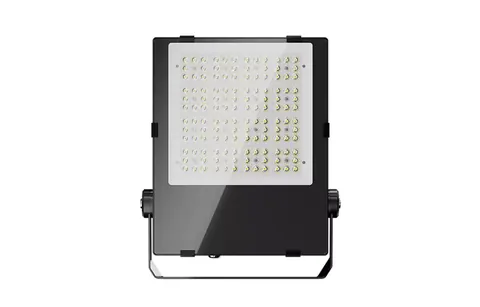 Knowledge
LED lighting before year end: KIA, EIA and planning for Dutch businesses
Many companies replace their lighting in the last months of the year. What the Dutch small-scale investment allowance (KIA) and energy investment allowance (EIA) can mean, what to watch out for and how to have the luminaires on site in time.
28 October 2026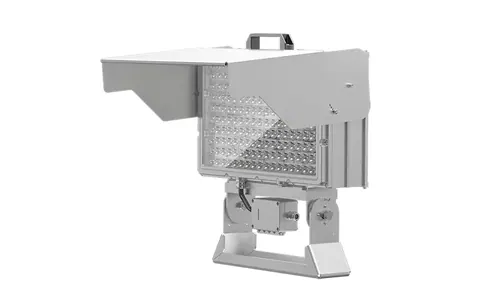 Knowledge
Site lighting for the dark months: checklist for business sites and car parks
Once the clocks go back it is dark by half past four, and the first and last hour of the working day happen in the dark. How to check your outdoor lighting now, fill the gaps and have the luminaires on site before the shortest days.
25 October 2026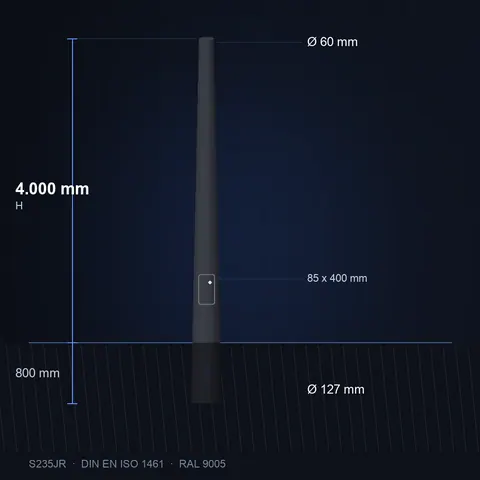 News
New: steel and aluminium lighting columns to the Dutch standard
Lichtplein now supplies conical steel lighting columns of 4 and 6 metres at a sharp price on request, plus aluminium columns of 3, 4 and 6 metres. With full dimensions on the product page, matching our street and post-top luminaires, delivered by truck.
8 October 2026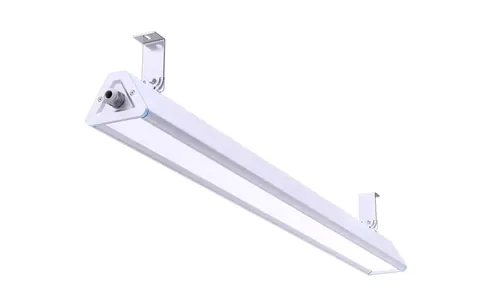 Worked examples
Worked example: a 4,000 m² warehouse from fluorescent to LED high bay
A fictional hall of 80 by 50 metres, 10 metres high, 200 lux required. Step by step we work out how many 150 W UFO high bays are needed, what that saves per year in kWh compared with fluorescent, and what sensors add on top.
8 October 2026