Worked example: lighting two padel courts to 300 lux
Two padel courts side by side, class II at 300 lux, 150 W padel floodlights on the fence or on 6 metre masts. From lux to lumens, number of luminaires, circuits and spill light, worked through step by step.
Starting points
This is a worked example: the club is fictional, the figures are representative. A club is building two padel courts of 20 by 10 metres side by side, with a 2 metre maintenance strip between them. The courts are used for training and club competition. In this example we apply class II under EN 12193: 300 lux average, uniformity 0.7 and a glare rating GR of no more than 50. The nearest house is 35 metres away in a residential area: zone E3 of the Dutch guideline on obtrusive light.
The luminaire is the 150 W padel floodlight from the ARENA series: 25,500 lumens, 170 lm/W, 5000 K, IP66, IK10 and a rectangular 100 by 60 degree light distribution. The mounting height is 6 metres, which is usual for padel.
Step 1: from lux to number of luminaires
The lumen method gives you the number of luminaires quickly. Two factors decide the outcome:
- Maintenance factor 0.8: LED output drops over the years and the lens gets dirty. You design for the end of life, not the first evening.
- Utilisation factor 0.5: the share of the luminaire lumens that lands on the court. For a padel optic right beside the court at 6 metres, 0.5 is a safe indication.
Per court: 300 lux times 200 m², divided by 0.8 times 0.5, is 150,000 luminaire lumens. Divided by 25,500 lumens per luminaire that is 5.9, so six luminaires per court. Check: 6 times 25,500 times 0.8 times 0.5, divided by 200, is 306 lux. Four luminaires give 204 lux (class III), eight give 408 lux.
For two courts: twelve luminaires, 1,800 W connected load, 306,000 lumens. The lumen method only gives the average; uniformity and GR are proven with a point-by-point calculation in a lighting plan.
Step 2: fence mounting or masts
Option A, fence mounting. The luminaires go on extended fence posts, outside the glass, at 6 metres. Six light points per court, three per long side: one level with the net line and one about 4 metres from each back wall. The luminaire sits almost horizontal, tilted 0 to 10 degrees, aimed at net height. Condition: the posts and their foundation must carry the weight and wind load at 6 metres; on a new court the court builder includes that. No masts, no extra foundations.
Option B, masts. If the posts cannot take the load, you use masts: four per court, two per long side at about 5 and 15 metres from the back wall. With two courts you share the middle row in the maintenance strip, so six TURRIS steel masts of 6 metres. Because each side now has two light points instead of three, and the mast stands about a metre further from the court edge, you mount two luminaires per light point: eight per court, sixteen in total, roughly 400 lux. To stay at twelve luminaires, place three masts per row: nine masts. Each mast gets a NEXUS mast connection box in the door opening with one fuse per luminaire. Match the mast top and the luminaire bracket when requesting the quote.
Step 3: circuits and switching
Give each court its own circuit: 900 W with fence mounting (about 3.9 A), 1,200 W with masts (about 5.2 A). Six to eight LED drivers on one circuit call for a type C MCB because of the inrush current. With 60 metres of cable from the distribution board, 2.5 mm² keeps the voltage drop indicatively below 2 percent. Give each circuit its own RCD, so one wet luminaire does not darken both courts.
Switch per court via a time switch or the booking system. The 150 W padel floodlight is not dimmable; switching off one long side as a half setting is pointless, because uniformity then drops below the standard. Dutch environmental rules for sports venues generally require the lighting to be off between 23:00 and 07:00 and whenever nobody is playing; check the current requirements with your municipality.
Step 4: limiting spill light
For zone E3 the guideline value for the vertical illuminance on the neighbours' facade is at most 10 lux, and 2 lux after 23:00; the current guideline and your municipality's requirements take precedence. This is how you stay well below that:
- Rectangular optic, mounted horizontally. The 100 by 60 degree beam covers the court without throwing light far over the glass wall. Every extra degree of tilt sends light over the glass wall into the neighbourhood.
- No higher than 6 metres. Higher makes the light source more visible from the surroundings without any gain in uniformity.
- Aim inwards. The luminaires on the outer long sides face the courts; the back towards the houses stays dark.
- Include the facade. Have the lighting plan calculate the vertical illuminance on the facade at 35 metres and attach that report to the permit application.
Bill of materials and lead time
Option A, fence mounting, two courts:
- 12 padel floodlights 150 W from the ARENA series
- 12 power cables with connectors (ARENA accessories)
- 2 circuits with type C MCB and RCD
Option B, masts, two courts:
- 16 padel floodlights 150 W
- 6 TURRIS steel masts of 6 metres, galvanised or powder coated RAL 9005
- 6 NEXUS mast connection boxes with fuses
- 6 foundations plus the cable between the masts
Luminaires ship within 5 working days from European stock, steel masts in 3 to 5 weeks: order the masts first. TURRIS masts come at a sharp price on request, answer within 48 hours; luminaire prices are on the product pages. The padel floodlight carries a 5 year warranty. Lichtplein sells to businesses only; with a business account you get project prices from 100 luminaires and from 20 masts, for instance when the club expands later.
Frequently asked questions
Can I reach 300 lux with four luminaires per court?
Not with 150 W: by the same calculation four units give about 200 lux, class III. Class II needs six 150 W luminaires, or two luminaires per light point when you have four light points.
Why a 6 metre mounting height and not 8?
At 6 metres the padel optic looks flat across the glass wall and GR stays below 50. A taller mast adds spill light and cost without better uniformity. Lower than the fence gives shadows and glare.
Which is cheaper, fence mounting or masts?
Fence mounting, provided the posts are rated for the load: you save masts, foundations and connection boxes. Masts are the choice for existing courts with light posts or for courts set further apart.
Is a lighting calculation mandatory?
Usually not mandatory, but for a permit application and for club competition you want uniformity, GR and the facade value in writing. A lighting plan from Lichtplein costs 350 euros excl. VAT.
What about an indoor padel hall?
Different rules apply indoors: there you use flat high bays with UGR<21 from the ATRIA series, and glare is rated as UGR rather than GR.
See the padel floodlights in the ARENA series and the 6 metre masts in the TURRIS series, or request a lighting plan for your courts.
Read also
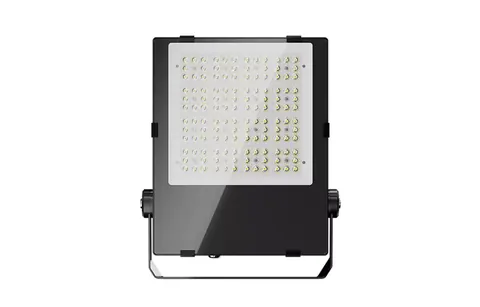 Knowledge
LED lighting before year end: KIA, EIA and planning for Dutch businesses
Many companies replace their lighting in the last months of the year. What the Dutch small-scale investment allowance (KIA) and energy investment allowance (EIA) can mean, what to watch out for and how to have the luminaires on site in time.
28 October 2026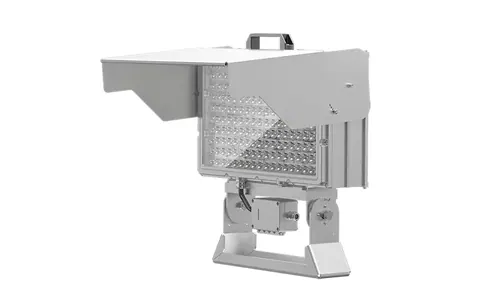 Knowledge
Site lighting for the dark months: checklist for business sites and car parks
Once the clocks go back it is dark by half past four, and the first and last hour of the working day happen in the dark. How to check your outdoor lighting now, fill the gaps and have the luminaires on site before the shortest days.
25 October 2026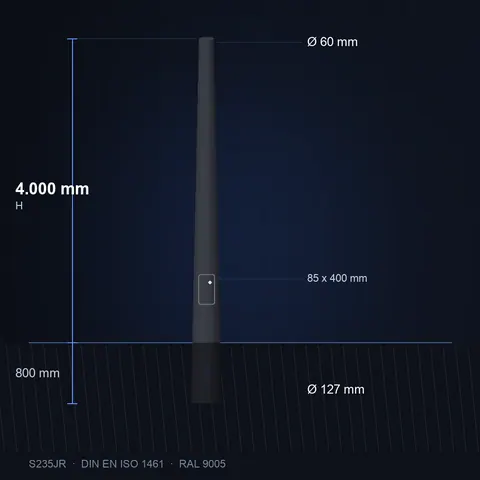 News
New: steel and aluminium lighting columns to the Dutch standard
Lichtplein now supplies conical steel lighting columns of 4 and 6 metres at a sharp price on request, plus aluminium columns of 3, 4 and 6 metres. With full dimensions on the product page, matching our street and post-top luminaires, delivered by truck.
8 October 2026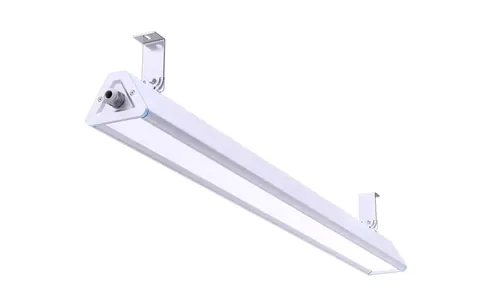 Worked examples
Worked example: a 4,000 m² warehouse from fluorescent to LED high bay
A fictional hall of 80 by 50 metres, 10 metres high, 200 lux required. Step by step we work out how many 150 W UFO high bays are needed, what that saves per year in kWh compared with fluorescent, and what sensors add on top.
8 October 2026