Spoorbrughof, Apeldoorn: lighting a new residential courtyard
In a new-build courtyard in Apeldoorn, compact street luminaires on low columns light the carriageway and footpaths evenly without disturbing the small-scale character. What this approach teaches and how you achieve the same with VIA and CIVIS.
The project in brief
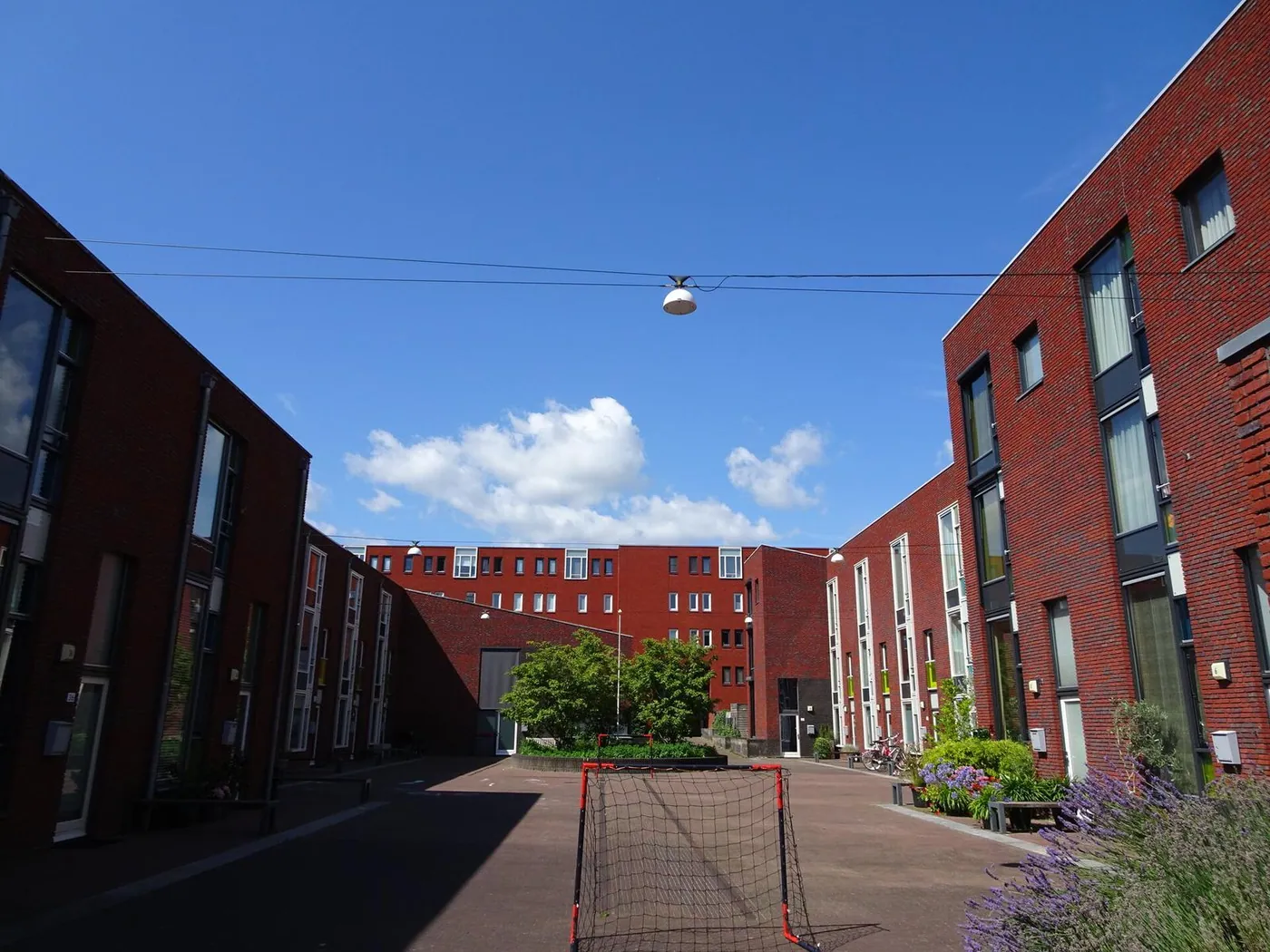
Spoorbrughof is a new residential courtyard in Apeldoorn: carriageway, parking bays and footpaths sit close together and the house fronts stand right by the road. Compact street luminaires on low columns were chosen for the lighting: unobtrusive by day, an even spread of light across carriageway and footpaths after dark.
After sunset the courtyard looks calm and orderly: the low lighting points keep the light on the road and away from the facades and bedroom windows. This project is described here as a practical example; below you read how to achieve a comparable set-up with the Lichtplein range.
Why low columns in a residential courtyard
A mounting height of 4 metres suits the scale of a courtyard and has three practical advantages:
- Less light on the facades. A low lighting point with a flat underside keeps the light on the road, not on the first floor.
- Lower wattage per column. At 4 metres, 1,500 lumens is enough for a narrow carriageway with a footpath.
- A quieter streetscape. A slender column with a compact luminaire does not dominate the new-build frontages.
The trade-off is a shorter column spacing: at a 4 metre mounting height, in practice 16 to 22 metres, depending on the road width.
Light level and uniformity
For home zones and residential courtyards an average of 3 to 5 lux on the carriageway is customary, with at least 0.6 to 1 lux at the darkest point. Footpaths come out at 2 to 3 lux. In a courtyard, uniformity matters more than the absolute level: residents notice dark patches between the columns straight away.
A Type II Short optic spreads the light widely across a narrow road of up to about 7 metres and keeps the throw short, so the next lighting point can stand close by. Choose warm white; it looks more pleasant between homes.
How to build this with the Lichtplein range
For a courtyard like this, the compact 25 W street luminaire from the VIA series fits: 1,500 lumens, up to 130 lumens per watt, IP66, IK08 and a Type II Short optic, designed for a 4 metre mounting height. It tilts on a 60 mm spigot and comes with 10 kV surge protection as standard. For a wider carriageway or parking strip, choose the model with adjustable output from 20 to 50 W.
For the columns, the 4 metre aluminium columns from CIVIS are a good match: lightweight, weather-resistant without a coating and free of rust at the base, supplied on a project basis with price on request. If you prefer steel, TURRIS offers a galvanised conical 4 metre column at a sharp price on request, answer within 48 hours. The column cut-out comes from NEXUS.
Points of attention for the installer
- Order the columns first. Lead time for steel columns 3 to 5 weeks, aluminium columns 4 to 6 weeks; luminaires ship from European stock within 5 working days. The column bases must be in before the paving goes down.
- Coordinate with the groundworks. Combine the cable trench and foundations with the utilities and allow for driveways and parking bays.
- Impact resistance. IK08 withstands a 5 joule impact and is sufficient for a residential courtyard.
- Business orders only. Lichtplein supplies businesses only; project prices apply from 100 luminaires and 20 columns.
Frequently asked questions
How many lux does a residential courtyard need?
An average of 3 to 5 lux on the carriageway and 2 to 3 lux on footpaths, with at least 0.6 to 1 lux at the darkest point. A lighting calculation sets the matching column spacing.
What column spacing goes with a 4 metre mounting height?
In practice 16 to 22 metres, depending on the road width and the chosen optic. With a narrow carriageway and a single footpath you can go towards the wider end.
Why aluminium columns on a new-build site?
Aluminium needs no coating, is lighter to erect and does not rust at the base. The CIVIS aluminium columns are supplied on a project basis, price on request.
Is 25 W enough for a residential courtyard?
On a 4 metre column over a narrow carriageway with a footpath, yes: 1,500 lumens with a Type II Short optic typically gives 3 to 5 lux at a spacing of 16 to 22 metres; a lighting calculation confirms the exact spacing. For wider roads choose the VIA model with adjustable output from 20 to 50 W.
Can Lichtplein produce the lighting plan for the courtyard?
Yes. A lighting calculation costs 350 euros excl. VAT and gives the column spacing, wattage and uniformity per street.
View the compact 25 W street luminaire in the VIA series and the aluminium columns of CIVIS, or request a lighting calculation for your own new-build courtyard. Lichtplein supplies businesses only.
Read also
 Knowledge
LED lighting before year end: KIA, EIA and planning for Dutch businesses
Many companies replace their lighting in the last months of the year. What the Dutch small-scale investment allowance (KIA) and energy investment allowance (EIA) can mean, what to watch out for and how to have the luminaires on site in time.
28 October 2026 Knowledge
Site lighting for the dark months: checklist for business sites and car parks
Once the clocks go back it is dark by half past four, and the first and last hour of the working day happen in the dark. How to check your outdoor lighting now, fill the gaps and have the luminaires on site before the shortest days.
25 October 2026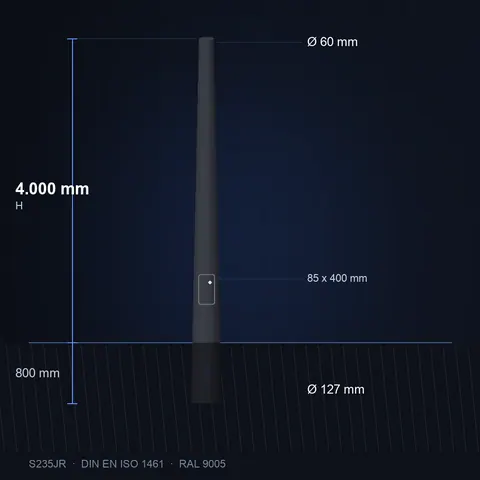 News
New: steel and aluminium lighting columns to the Dutch standard
Lichtplein now supplies conical steel lighting columns of 4 and 6 metres at a sharp price on request, plus aluminium columns of 3, 4 and 6 metres. With full dimensions on the product page, matching our street and post-top luminaires, delivered by truck.
8 October 2026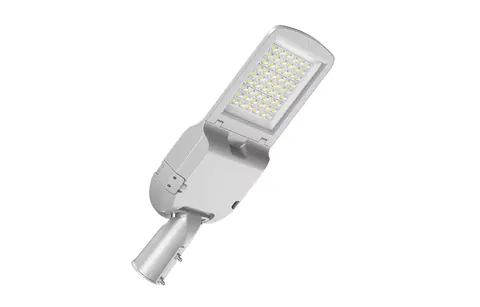 Knowledge
3000K, 4000K or 5000K: choosing colour temperature by application
Kelvin decides whether light looks warm, neutral or cool, and with it whether a street feels comfortable and a warehouse works well. We set out the right colour temperature for each application.
7 October 2026