IP and IK ratings explained: IP65, IP66, IP67, IP69K, IK08 and IK10
The IP rating tells you how well a luminaire resists dust and water, the IK rating how much impact energy the housing can take. Read what the figures mean, which rating you need in which environment and which series from our range fit the job.
What the IP code means
IP stands for Ingress Protection and is defined in the IEC 60529 standard. The code has two digits: the first (0 to 6) covers solid objects and dust, the second (0 to 9) covers water. The higher the digit, the better the protection. An X in place of a digit means that property has not been tested.
- First digit 5: dust protected, a small amount of dust may enter as long as operation is not affected.
- First digit 6: dust tight, even under negative pressure inside the housing.
- Second digit 5: water jets, tested with 12.5 litres per minute from 3 metres.
- Second digit 6: powerful water jets, tested with 100 litres per minute.
- Second digit 7: temporary immersion, 30 minutes at 1 metre depth.
- Second digit 8: continuous immersion deeper than 1 metre, to the manufacturer's specification.
- Second digit 9K: high-pressure cleaning with hot water at 80 degrees and 80 to 100 bar, from 10 to 15 centimetres.
IP65, IP66, IP67 and IP69K side by side
Four ratings come up most often with luminaires:
- IP65: the standard for warehouses, production halls, car parks and outdoor luminaires under a canopy.
- IP66: withstands driving rain and powerful jets, the right rating for luminaires mounted unsheltered on a column or facade.
- IP67: withstands temporary immersion, needed for in-ground uplights and locations that can flood.
- IP69K: withstands hot high-pressure cleaning, for car washes, livestock buildings, abattoirs and the food industry.
Watch out for a common misconception: IP67 is not automatically better than IP66. The immersion test says nothing about pressurised water jets. If a luminaire has to cope with both, both ratings should appear on the rating plate, for example IP66/IP67. If a luminaire is regularly cleaned with a pressure washer, only IP69K genuinely covers that.
What the IK code means
The IK code comes from the IEC 62262 standard and states how much impact energy a housing can absorb without losing its protection. The scale runs from IK00 to IK10, expressed in joules. In the test a weight of fixed mass is dropped onto the luminaire from a fixed height.
- IK06: 1 joule, a light knock.
- IK07: 2 joules.
- IK08: 5 joules, a 1.7 kilogram hammer dropped from 30 centimetres.
- IK09: 10 joules.
- IK10: 20 joules, a 5 kilogram hammer dropped from 40 centimetres.
IK08 is the practical minimum for outdoor lighting and car parks. IK10 is the highest rating in the standard and the choice for anything within reach and anywhere balls, forklifts or vandals play a part. Designations such as IK10+ or IK11 are not in the standard; in that case ask for the test report with the actual value in joules.
Which rating for which environment
The practical choice per space:
- Office, shop and home: dry and indoors, IP20 is sufficient. The wiring accessories from the Liregus Modern and Liregus Alfa series are IP20.
- Warehouse and production hall: IP65 against dust and occasional wet cleaning. The high bays from the ATRIA series are IP65, and the flat version with UGR<21 is also IK10.
- Car park: at least IP65 because of condensation, exhaust fumes and wet floors. Above traffic lanes and under ceilings lower than 3 metres choose IK10. The linear luminaires from the TRIVO series are designed for this and can be looped through.
- Livestock buildings: at least IP65, IP69K where a pressure washer is used. Ammonia attacks metal, so choose a plastic housing with stainless steel clips.
- Car wash and food industry: IP69K is the appropriate rating here. The 40 W TRIVO IP69K delivers 6,000 lumens and is tested for cleaning with hot water at high pressure.
- Site, facade and street: IP66 for anything mounted unsheltered. The floodlights from the FLUX series and the street luminaires from the VIA series are IP66.
- Vandalism prone: underpasses, cycle shelters, school playgrounds, bus stops and anything below 2.5 metres mounting height: IK10. The tennis and padel floodlights from the ARENA series are IK10 because of ball impact.
Column height and impact resistance
With street lighting the required IK rating is tied to the light point height. A street luminaire on a 4 metre column, such as the 25 W VIA for residential streets, is IK08 and sits out of reach, so it is adequately protected. Mount the same luminaire on a 3 metre wall bracket along a cycle path and IK10 is the better choice. The steel columns from the TURRIS series of 4 and 6 metres provide that height and fit the 60 mm spigot of the VIA luminaires. The taller the column, the more the IP rating matters: on top of a 6 metre column the luminaire sits fully in driving rain and IP66 is the minimum.
Keeping the rating intact after installation
An IP rating applies to the luminaire as the manufacturer tests it: closed, with the correct gland and an intact seal. In practice it goes wrong on these points:
- Use the supplied cable gland and check the cable diameter; a cable that is too thin will not seal.
- Close unused cable entries with a blanking plug of the same IP rating.
- Loop-through linear luminaires such as TRIVO keep their rating only with the matching connectors.
- Tighten screw covers to the specified torque; too tight crushes the rubber seal.
- Mount outdoor luminaires with the cable entry facing down so water cannot run along the cable into the housing.
- Where temperatures swing widely, as in livestock buildings and car washes, a pressure equalisation vent prevents condensation behind the lens.
Frequently asked questions
Is IP67 better than IP66?
No. IP67 tests immersion, IP66 tests powerful water jets. For rain and cleaning with a hose IP66 is the right rating; only luminaires that may end up under water need IP67.
Do I need IP69K in a car park?
No. IP65 is sufficient for condensation, wet floors and occasional cleaning. IP69K is only needed when the luminaires themselves are regularly hosed down with hot water at high pressure, as in a car wash or livestock building.
What does the K in IP69K stand for?
The K comes from the German automotive standard in which the test was originally defined. A comparable test has since been added to IEC 60529 as IPX9: water at 80 degrees, 80 to 100 bar, from 10 to 15 centimetres, at four angles.
Which IK rating does a sports hall need?
At least IK08, IK10 for ball sports. IK10 is not the same as ball impact safe: for halls where balls are thrown, ask for a luminaire that has also passed the separate ball impact test.
Does the IP rating also cover a separately supplied driver?
No, a separate driver has its own IP rating. With the VIA street luminaires with remote driver you can mount the driver inside the column behind the access door; check the rating of the driver itself as well.
Not sure which rating your project needs? Request a lighting calculation or send your parts list via the quote page and we will advise the right IP and IK rating for each space.
Read also
 Knowledge
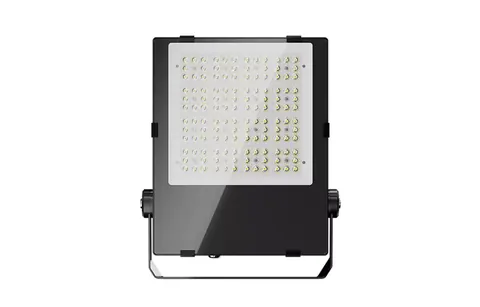
LED lighting before year end: KIA, EIA and planning for Dutch businesses
Many companies replace their lighting in the last months of the year. What the Dutch small-scale investment allowance (KIA) and energy investment allowance (EIA) can mean, what to watch out for and how to have the luminaires on site in time.
28 October 2026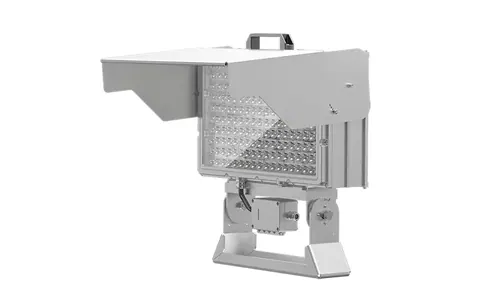 Knowledge
Site lighting for the dark months: checklist for business sites and car parks
Once the clocks go back it is dark by half past four, and the first and last hour of the working day happen in the dark. How to check your outdoor lighting now, fill the gaps and have the luminaires on site before the shortest days.
25 October 2026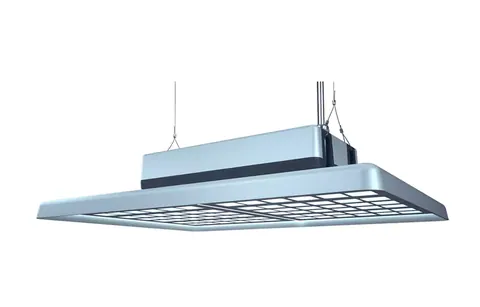 Knowledge
UFO or linear high bay: which one for your warehouse or hall
A high bay comes as a round UFO, as a linear luminaire above the racking aisle and as a flat panel with UGR<21. Which one you choose depends on mounting height, racking and the work done in the hall. This article gives the selection rules and a worked example for the number of luminaires.
8 October 2026 Knowledge
3000K, 4000K or 5000K: choosing colour temperature by application
Kelvin decides whether light looks warm, neutral or cool, and with it whether a street feels comfortable and a warehouse works well. We set out the right colour temperature for each application.
7 October 2026