Kromme Nieuwe Gracht, Utrecht: lighting a listed canal house
On the Kromme Nieuwe Gracht in Utrecht, a listed canal house received a classic-looking luminaire with modern LED technology. What lighting in a conservation area involves, and which Lichtplein ranges fit the job.
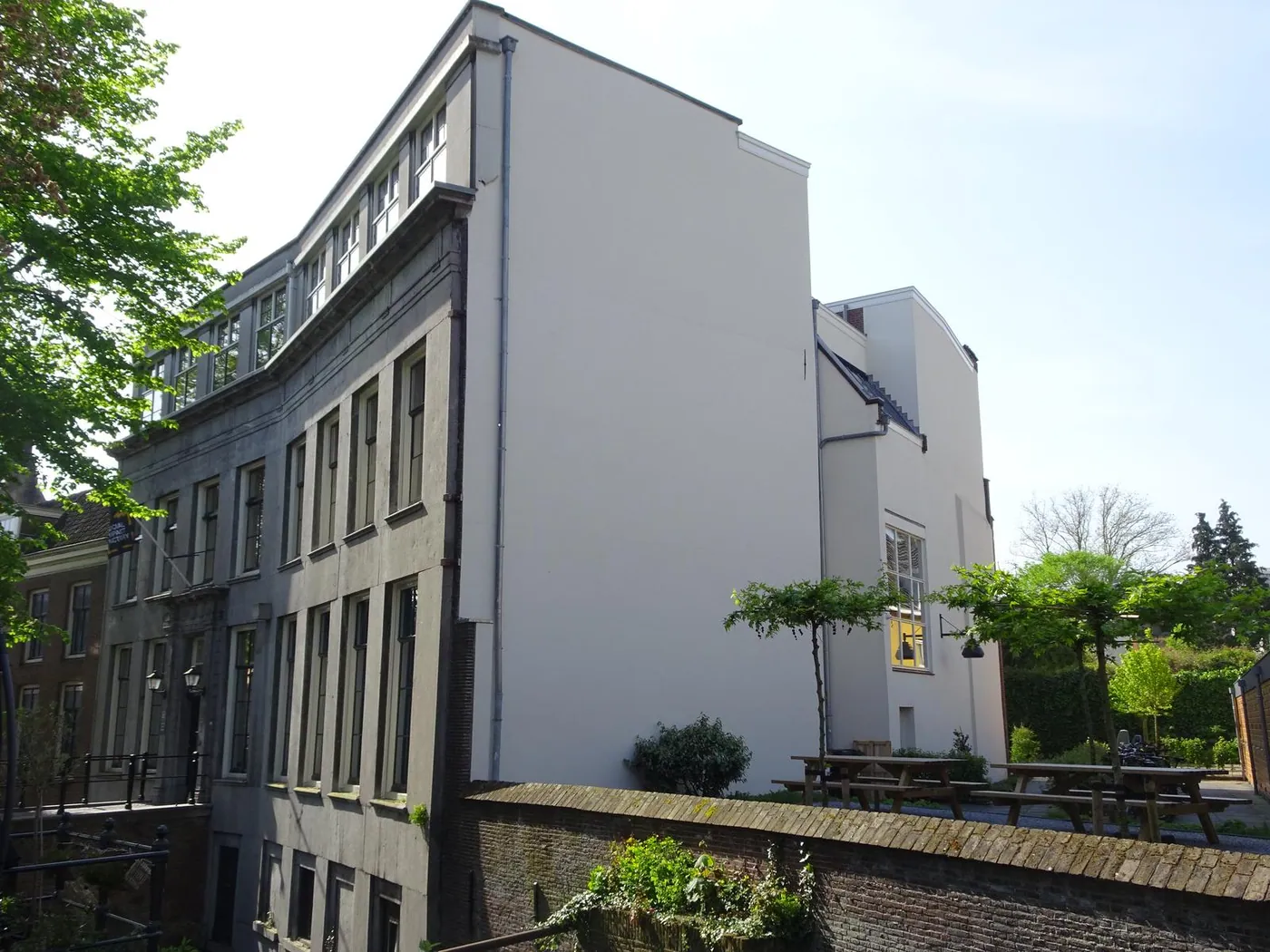
A canal house in the old city centre
The Kromme Nieuwe Gracht runs through the eastern part of Utrecht's historic centre, a conservation area of quays, wharves and centuries-old facades. On this canal stands a listed building whose entrance and quay were lit for years by a lantern with a conventional light source: high consumption, uneven light and a lamp that needed replacing regularly.
The brief was clear. The light point had to remain part of the historic streetscape, but with today's technology: less energy, less maintenance and a light distribution that illuminates facade and quay evenly without disturbing the residents across the water.
Classic form, modern LED
The choice fell on a luminaire with a classic lantern silhouette housing a modern LED module. From the outside the difference from the old lantern is barely visible; inside everything has changed: a sealed LED module, a driver and a gasketed housing.
In the Lichtplein range, the classic post-top luminaire from POLARIS matches this approach: 40 W, 4,000 lm, 140 lm/W, IP66, 120° light distribution and mounting on an 80 mm column top, with a 5 year warranty. The modern POLARIS is available with adjustable output from 30 to 60 W and a colour temperature of 2200, 3000 or 4000 K.
Light level and colour in heritage settings
Pedestrian areas and residential streets in a historic centre usually fall under the P classes of EN 13201: P3 or P4, which means 7.5 or 5 lux on average. More light is rarely better here. A lantern at a 4 metre mounting height with 4,000 lm generally covers that class, provided the columns are spaced no more than 3 to 4 times the mounting height apart, so 12 to 16 metres. A lighting calculation gives certainty on this.
With brick and natural stone, choose warm white, 2200 to 3000 K. It keeps the facade looking natural and produces less spill light into bedroom windows than cool white. A flat cover over the LED module prevents glare and upward light.
Permits and consultation
For a listed building or a conservation area, a new light point on the facade often requires a permit from the municipality. A free-standing column on the quay is often easier to agree than a wall bracket. Present the proposal early to the municipality's heritage department and bring a photo impression and a colour proposal.
A 4 metre steel column from TURRIS, powder coated in RAL 9005, is the least conspicuous choice in a historic street. The column connection box from NEXUS fits in the door hatch and keeps the fuse accessible.
How to approach a similar project
- Photograph the existing situation and measure the top diameter of the existing column.
- Measure the current light level in lux, so you know what you are improving.
- Have a lighting calculation made for the correct P class.
- Fit one trial luminaire on the column before ordering for the whole street.
- Allow 3 to 6 weeks lead time for columns; luminaires ship within 5 working days.
Frequently asked questions
Does the classic POLARIS fit an existing cast iron or steel column?
Yes, if the column top is 80 mm. Measure the top diameter and state it with your order, and we can check whether the combination fits.
May I fix a luminaire to a listed facade?
For a listed building this often requires a permit, and the municipality's heritage department reviews the proposal. A free-standing column on the quay is often quicker to agree.
Which colour temperature should I choose in a heritage setting?
Warm white, 2200 to 3000 K. The modern POLARIS can be set afterwards with the remote control. The classic version delivers 4000 K; if you want warmer light, ask about the options when requesting a quote.
How many columns do I need for a canal quay?
Rule of thumb for post-top luminaires: columns at 3 to 4 times the mounting height. A lighting calculation (350 euro excl. VAT) gives certainty about number, height and wattage.
Browse the classic and modern post-top luminaires from POLARIS and the matching columns from TURRIS, or request a quote for your project in a historic centre.
Read also
 Knowledge
LED lighting before year end: KIA, EIA and planning for Dutch businesses
Many companies replace their lighting in the last months of the year. What the Dutch small-scale investment allowance (KIA) and energy investment allowance (EIA) can mean, what to watch out for and how to have the luminaires on site in time.
28 October 2026 Knowledge
Site lighting for the dark months: checklist for business sites and car parks
Once the clocks go back it is dark by half past four, and the first and last hour of the working day happen in the dark. How to check your outdoor lighting now, fill the gaps and have the luminaires on site before the shortest days.
25 October 2026 News
New: steel and aluminium lighting columns to the Dutch standard
Lichtplein now supplies conical steel lighting columns of 4 and 6 metres at a sharp price on request, plus aluminium columns of 3, 4 and 6 metres. With full dimensions on the product page, matching our street and post-top luminaires, delivered by truck.
8 October 2026 Knowledge
3000K, 4000K or 5000K: choosing colour temperature by application
Kelvin decides whether light looks warm, neutral or cool, and with it whether a street feels comfortable and a warehouse works well. We set out the right colour temperature for each application.
7 October 2026