Notweg, Amsterdam Osdorp: street luminaire with two light sources
On the Notweg in Amsterdam Osdorp, a residential street was fitted with luminaires carrying two light sources side by side, each with its own light distribution and lumen output. What that does for uniformity, and how you apply the same principle with the VIA series.
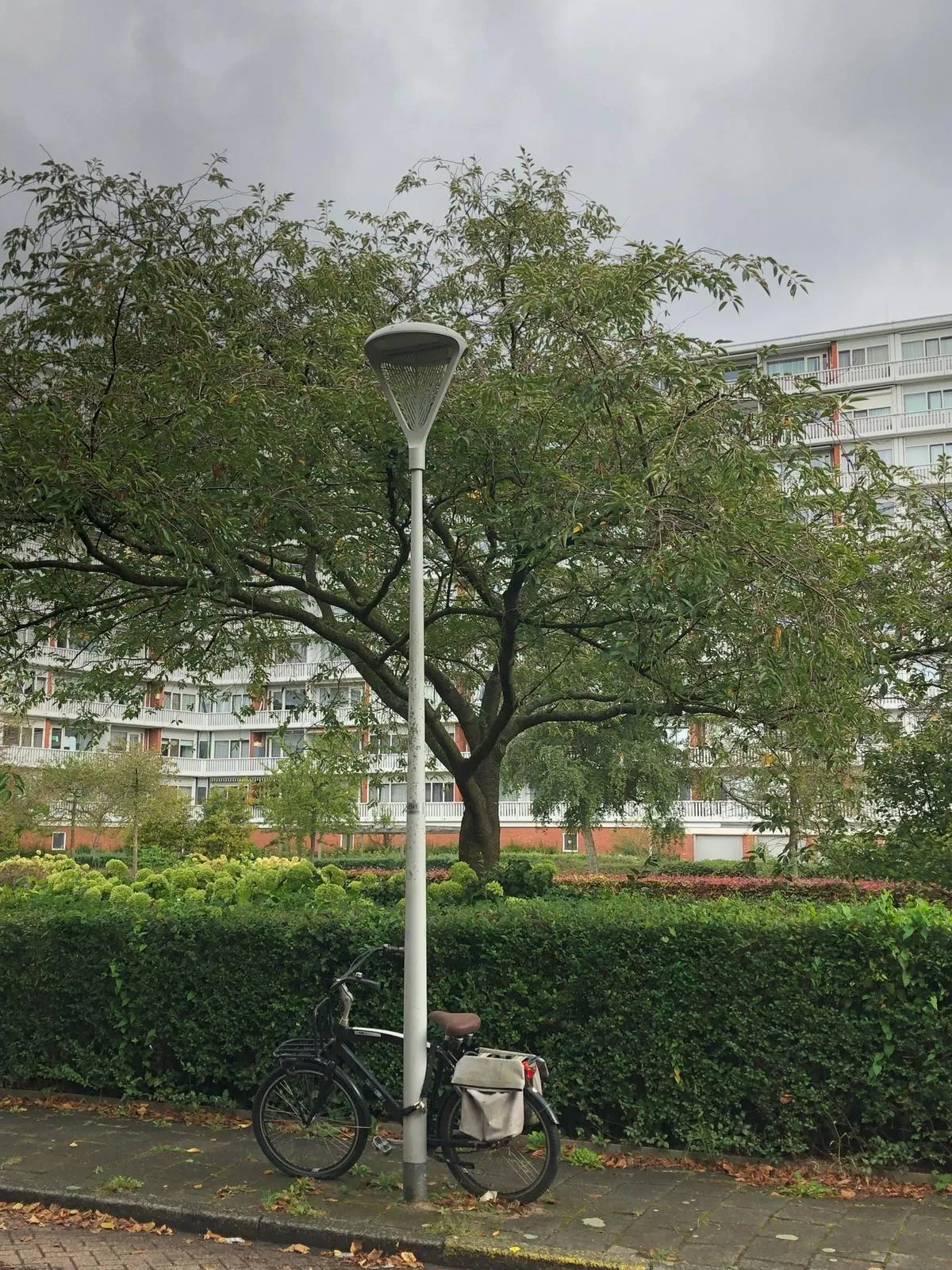
The situation on the Notweg
The Notweg is in Osdorp, in Amsterdam Nieuw-West: a residential street with housing, parking bays and footways on both sides. Streets like this are hard to light evenly. The carriageway needs a wide light distribution, the footway along the frontages a short one, and there must be no dark patches between the columns.
When the lighting was renewed, a street luminaire with two light sources placed side by side was chosen. For each source, the light distribution and lumen output were selected separately, matched to the zone that source has to light. Lichtplein was not involved in this project; we describe it as an example of a design principle you can also apply with our range.
Two light sources, two jobs
The principle is simple. One source gets an optic for the carriageway at full output, the other an optic for the footway at a lower setting. A single lighting point then lights two zones, without over-lighting the carriageway just to bring the footway up to level.
The result is higher uniformity: the difference between the brightest and the darkest spot shrinks, while the installed load does not increase.
Why uniformity matters
Residential streets are usually assigned a P class from EN 13201. Class P4 calls for an average of 5 lux with a minimum of 1 lux at every point; class P3 calls for 7.5 lux with a minimum of 1.5 lux. That lower limit is the hard part: halfway between two columns the level drops quickly if the optic does not match the column spacing.
With two separately adjustable sources you put the light exactly where the standard demands it, without pushing up the average unnecessarily.
How to apply this with VIA and TURRIS
The same principle, choosing the light distribution and output per lighting point, is what you apply with the street luminaires of VIA. The series offers Type II and Type III optics, outputs from 25 to 100 W, on some versions adjustable per luminaire by dip switch, and versions with DALI-2 and D4i for dimming per lighting point. The luminaires are IP66, carry 10 kV surge protection and tilt on a 60 mm spigot.
- Carriageway: Type III optic at full output, mounting height 6 metres.
- Footway or parking strip: Type II optic at a lower setting, mounting height 4 metres.
- Columns: conical steel TURRIS columns of 4 and 6 metres, hot-dip galvanised, from stock.
- Connection: a column cut-out from the NEXUS series in the column door.
Design points to watch
Fix the column spacing and mounting height first, and only then the output. A lighting calculation shows in advance whether uniformity will be met. In residential streets, keep light nuisance in mind: a warm colour temperature of 2700 K and an optic with no upward light limit spill into bedrooms. With AstroDIM or DALI-2 you dim back to a lower level after midnight and save energy without dropping below the standard.
Frequently asked questions
Does Lichtplein stock a luminaire with two light sources in one housing?
The VIA series works with one adjustable light source per luminaire. You achieve the same effect by choosing the optic and output per lighting point, or by combining two luminaires on one column at junctions; ask for a quotation for that.
Which optic do I choose for a residential street?
Type II for narrow streets and footways with columns close to the kerb, Type III for wider carriageways where the light has to reach further across the road. If in doubt, a lighting calculation settles it.
Which lighting class applies to a residential street?
Usually a P class from EN 13201, often P3 or P4: an average of 7.5 or 5 lux with a minimum of 1.5 or 1 lux. The municipality or the asset manager sets the class per street.
Can I change the output later?
On the VIA versions with adjustable output you set the output by dip switch inside the luminaire; on the DALI-2 versions you adjust the dimming profile through the control system. On a fixed-output version you choose the output when ordering.
Want to know which optic and output your street needs? Request a lighting calculation or view the street luminaires of VIA and the columns of TURRIS. Lichtplein supplies businesses only.
Read also
 Knowledge
LED lighting before year end: KIA, EIA and planning for Dutch businesses
Many companies replace their lighting in the last months of the year. What the Dutch small-scale investment allowance (KIA) and energy investment allowance (EIA) can mean, what to watch out for and how to have the luminaires on site in time.
28 October 2026 Knowledge
Site lighting for the dark months: checklist for business sites and car parks
Once the clocks go back it is dark by half past four, and the first and last hour of the working day happen in the dark. How to check your outdoor lighting now, fill the gaps and have the luminaires on site before the shortest days.
25 October 2026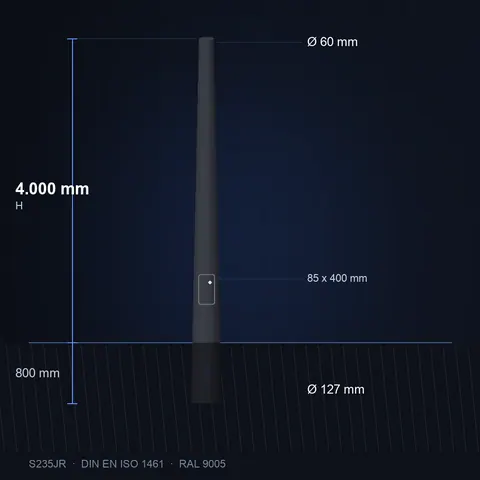 News
New: steel and aluminium lighting columns to the Dutch standard
Lichtplein now supplies conical steel lighting columns of 4 and 6 metres at a sharp price on request, plus aluminium columns of 3, 4 and 6 metres. With full dimensions on the product page, matching our street and post-top luminaires, delivered by truck.
8 October 2026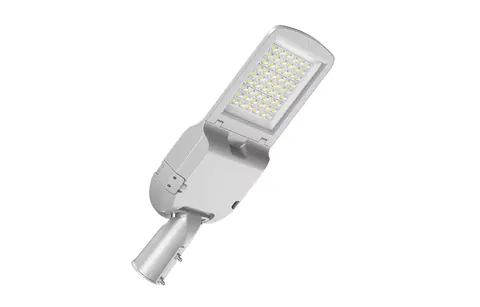 Knowledge
3000K, 4000K or 5000K: choosing colour temperature by application
Kelvin decides whether light looks warm, neutral or cool, and with it whether a street feels comfortable and a warehouse works well. We set out the right colour temperature for each application.
7 October 2026