Schoterlandseweg, Heerenveen: contemporary design with warm light
Along the Schoterlandseweg in the municipality of Heerenveen, a through road in a village setting received new street lighting with a clean, geometric luminaire and warm white light. What lighting designers ask for on a road like this, and how you achieve the same look with the VIA and POLARIS ranges.
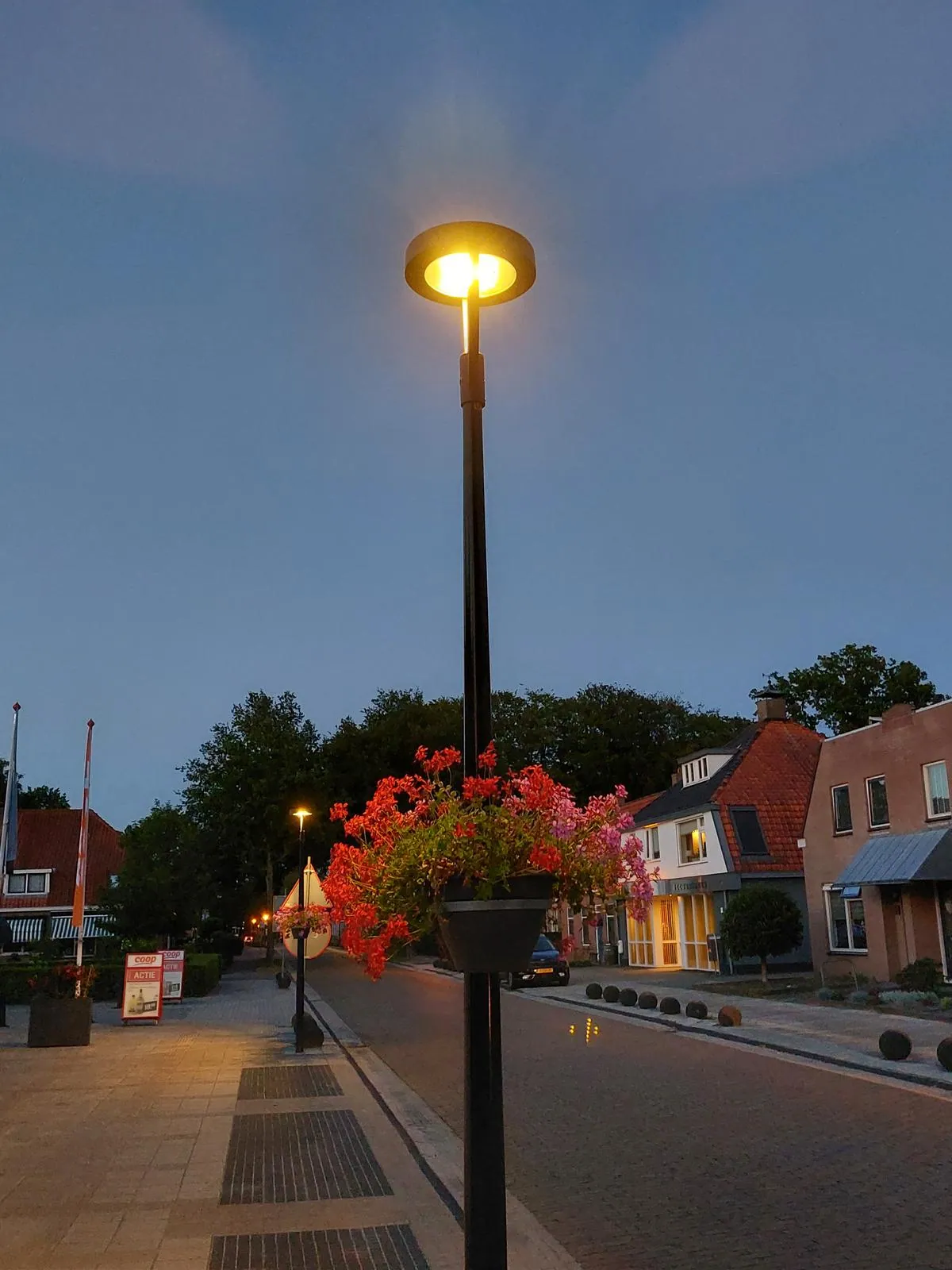
A village road with houses close to the carriageway
The Schoterlandseweg runs as a long ribbon road through the villages east of Heerenveen, including Nieuwehorne. Along much of its length, houses stand close to the carriageway and cyclists share the road with through traffic. When public lighting on a road like this is renewed, two requirements usually apply: the luminaire has to fit the village scene by day, and the light has to be warm and calm in the evening, without spill light into bedrooms.
Clean, geometric lines on the column
The chosen luminaires have a contemporary design with clean, geometric lines and no classical decoration. Lighting designers and architects regularly set this requirement, outside cities too. A luminaire often stays on the same column for fifteen years or more and shapes the streetscape by day as much as the light does by night. A slender conical column and a clean luminaire in one colour give a calm, coherent picture.
Warm white light in the village centre
The light along the road is warm white. In residential streets and village centres, 3000 K or warmer has become the usual choice: residents find it more pleasant, it causes less nuisance behind the curtains and it follows current guidance on light pollution for people and wildlife. You lose very little efficiency: the street luminaires in our VIA range reach 150 to 160 lm/W at 2700 K. For a village road like this, a P class from EN 13201 often comes into view, such as P3 or P2 with an average of 7.5 or 10 lux. Which class applies is decided by the road authority.
The same look with VIA and POLARIS
This project was not supplied by Lichtplein, but you can create the same look with ranges from our assortment. The street luminaires in the VIA range have a flat, clean housing, are rated IP66, tilt on a 60 mm spigot and are available in warm white at 2700 K. 10 kV surge protection is fitted as standard, useful on long cable runs outside the village centre. You choose the control: DALI-2 and D4i, a driver with AstroDIM, or power setting via dip switch.
On a small square, by the church or around a bus stop, a post-top luminaire is the better fit. POLARIS lights all round, fits columns of 60 to 80 mm and can be set in both power and colour temperature (2200 K, 3000 K or 4000 K), with the remote control if required.
Columns, connection and spacing
Conical steel columns of 4 or 6 metres from the TURRIS range are the logical base here, hot-dip galvanised or powder coated in RAL 9005. The cut-out units in the NEXUS range fit in the door opening. With a Type II or Type III optic at 4 metres, a rule of thumb gives column spacings of roughly 20 to 30 metres, depending on road width and lighting class. A lighting calculation for 350 euros excluding VAT gives certainty on class and uniformity in advance.
Frequently asked questions
Which colour temperature suits a village road?
Often 3000 K or warmer: pleasant for residents and less light nuisance. On distributor roads and business parks, 4000 K is more common.
Street luminaire or post-top luminaire?
Along the road, a street luminaire with an asymmetric optic so the light lands on the carriageway. On squares and in parks, a post-top luminaire that lights all round.
Can the lighting dim at night?
Yes. An AstroDIM driver dims on its own in the late hours; with DALI-2 or D4i you control the luminaires centrally.
Did Lichtplein carry out this project?
No. We describe it as an example of a current design brief and show which ranges from our assortment give the same look.
Browse the street luminaires in the VIA range and the post-top luminaires in POLARIS, or request a lighting calculation for your village road. Lichtplein supplies businesses only.
Read also
 Knowledge
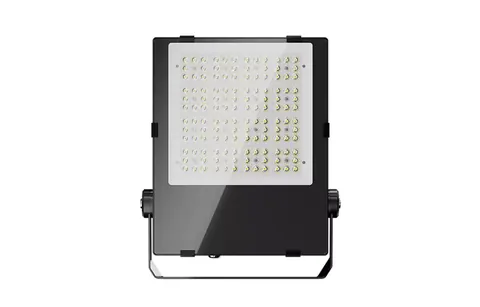
LED lighting before year end: KIA, EIA and planning for Dutch businesses
Many companies replace their lighting in the last months of the year. What the Dutch small-scale investment allowance (KIA) and energy investment allowance (EIA) can mean, what to watch out for and how to have the luminaires on site in time.
28 October 2026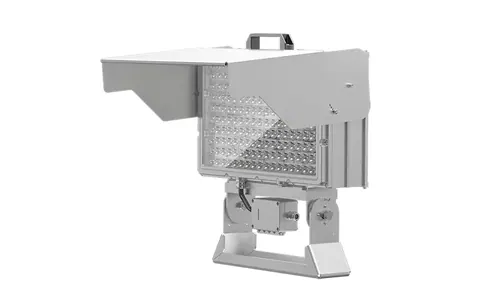 Knowledge
Site lighting for the dark months: checklist for business sites and car parks
Once the clocks go back it is dark by half past four, and the first and last hour of the working day happen in the dark. How to check your outdoor lighting now, fill the gaps and have the luminaires on site before the shortest days.
25 October 2026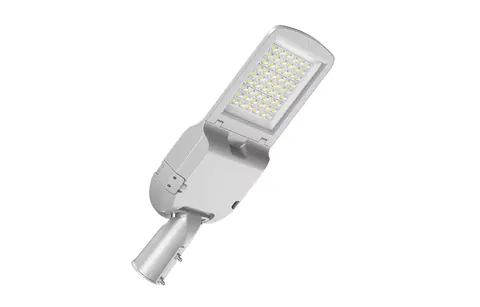 Knowledge
3000K, 4000K or 5000K: choosing colour temperature by application
Kelvin decides whether light looks warm, neutral or cool, and with it whether a street feels comfortable and a warehouse works well. We set out the right colour temperature for each application.
7 October 2026 Knowledge
IP and IK ratings explained: IP65, IP66, IP67, IP69K, IK08 and IK10
The IP rating tells you how well a luminaire resists dust and water, the IK rating how much impact energy the housing can take. Read what the figures mean, which rating you need in which environment and which series from our range fit the job.
6 October 2026