Lighting tennis and padel courts: lux, columns and spill light
How many lux does a tennis or padel court need, how many columns do you install and how do you keep the light away from the neighbours? A practical guide for installers.
Which class and how many lux
Outdoor sports lighting is designed to EN 12193, the current standard for sports lighting. It divides use into three classes. Padel is not listed separately in the standard and in Dutch practice is treated the same as tennis. For outdoor tennis and padel this means:
- Class I: 500 lux average, uniformity 0.7. Tournaments and high-level matches.
- Class II: 300 lux average, uniformity 0.7. Club competition and training.
- Class III: 200 lux average, uniformity 0.6. Recreational play.
Uniformity is the ratio between the lowest and the average illuminance on the court. The standard also limits glare: the glare rating GR may not exceed 50. For most clubs class II is the target; for a single court at a campsite or company, class III is enough. Indoor tennis halls have different requirements: there you use flat high bays with UGR<21 from the ATRIA series.
Tennis: four 8 metre columns per court
A tennis court measures 23.77 by 10.97 metres, but you light the whole playing area including the run-off: roughly 36 by 18 metres. The usual layout is four columns per court, two on each long side outside the run-off, roughly level with the service lines. Where two courts lie side by side you share the middle columns: six columns for two courts.
A mounting height of 8 metres is common for classes II and I. The floodlights then look across the court at a shallow enough angle for good uniformity, without players tracking a lob looking straight into the light source. Columns of 6 metres suit class III. Each column carries one or two floodlights. The tennis court floodlight from the ARENA series is adjustable from 60 to 150 W with a 120 by 45 degree optic, so you tune the output to the required class.
Padel: fence mounting at 6 metres
A padel court is 20 by 10 metres and is enclosed by glass and mesh fencing. Separate columns are rarely needed: the floodlights go on extended fence posts, outside the glass, at a mounting height of 6 metres. Nothing stands in the way around the court.
The basic layout is four floodlights, two per long side. With four 150 W padel floodlights of 25,500 lumens you land, as a guide, on class III up to the lower limit of class II. For a guaranteed class II or for class I you go to six or eight floodlights. With fence mounting, check weight and wind load: the posts and their foundations must carry the load at 6 metres.
Optics: why 100 by 60 degrees
The optic decides whether the light lands on the court or next to it. A padel floodlight with an asymmetric 100 by 60 degree beam spreads widely along the length of the court and narrowly across it. The fixture therefore hangs almost horizontally, with a tilt of 0 to 10 degrees, and the light stays within the court. For tennis 120 by 45 degrees is common: wider, because the columns stand further from the court.
The greater the tilt, the more light passes over the court. A symmetric 120 degree floodlight tilted up by 45 degrees lights the neighbourhood better than the court. So always choose a sports optic and aim at net height, not at the far side. A colour temperature of 4000 to 5000 K gives good contrast with the yellow ball.
Spill light and the neighbours
Complaints about light nuisance almost always come from residents looking at the light source from their living room. The Dutch obtrusive light guideline of the NSVV, the Dutch lighting society, divides the surroundings into zones and gives guide values for the vertical illuminance on neighbouring facades, roughly:
- E1 natural area: 2 lux, after 23:00 1 lux
- E2 rural area: 5 lux, after 23:00 1 lux
- E3 urban area: 10 lux, after 23:00 2 lux
- E4 city centre and industry: 25 lux, after 23:00 4 lux
In the Netherlands, sports facilities are also subject to environmental rules: court lighting is off between 23:00 and 07:00 and whenever nobody is playing. The municipality may set stricter conditions; check the local environmental plan before you order. Practical measures: an asymmetric optic without tilt, no light above the horizontal, switching per court with a time clock, and a lighting calculation that includes the illuminance on the nearest facades. In a permit application that last point is often the difference between approval and objection.
Columns, connection box and lead time
For a 6 metre mounting height Lichtplein supplies the TURRIS steel lighting column from stock: conical, hot-dip galvanised or additionally powder coated in RAL 9005, at a sharp price on request with an answer within 48 hours. Columns of 8 metres are not part of the standard range; ask for them via the quote form. Allow 3 to 5 weeks for steel columns and 4 to 6 weeks for aluminium columns; fixtures ship from European stock within 5 working days.
The column door houses a connection box from the NEXUS series with one or two fuses, so each floodlight is protected separately. Check the column top diameter for the floodlight bracket and choose fixtures rated IP66 and IK10. Lichtplein sells to businesses only; with a business account you get project prices from 100 fixtures and from 20 columns.
Frequently asked questions
How many lux does a recreational tennis court need?
Class III to EN 12193: 200 lux average with a uniformity of 0.6. For club competition you design to class II: 300 lux and 0.7.
How many floodlights does a padel court need?
Four 150 W floodlights at 6 metres for class III, six to eight for class II or I. A lighting calculation gives the exact number for your situation.
Can I reuse existing columns when switching to LED?
Often, yes. LED floodlights are usually lighter than old discharge fixtures, but check the height, the top diameter, the condition of the steel and the connection box. If in doubt, have the column inspected.
What does a lighting calculation for a tennis or padel court cost?
A lighting plan costs 350 euros excluding VAT and covers the illuminance on the court, the uniformity and the spill light to the surroundings.
Browse the tennis and padel floodlights in the ARENA series or request a lighting calculation for your court straight away.
Read also
 Knowledge
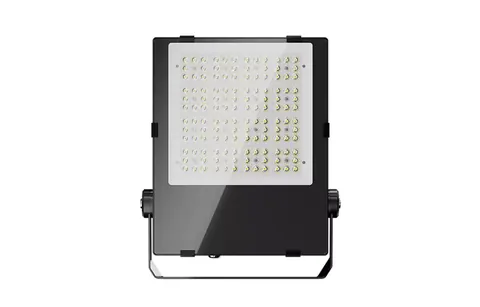
LED lighting before year end: KIA, EIA and planning for Dutch businesses
Many companies replace their lighting in the last months of the year. What the Dutch small-scale investment allowance (KIA) and energy investment allowance (EIA) can mean, what to watch out for and how to have the luminaires on site in time.
28 October 2026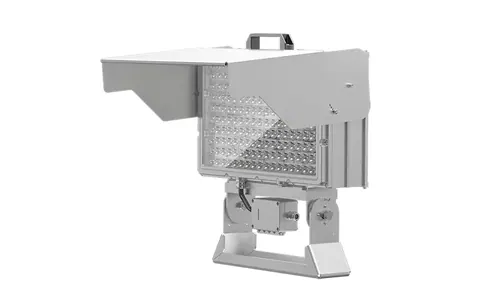 Knowledge
Site lighting for the dark months: checklist for business sites and car parks
Once the clocks go back it is dark by half past four, and the first and last hour of the working day happen in the dark. How to check your outdoor lighting now, fill the gaps and have the luminaires on site before the shortest days.
25 October 2026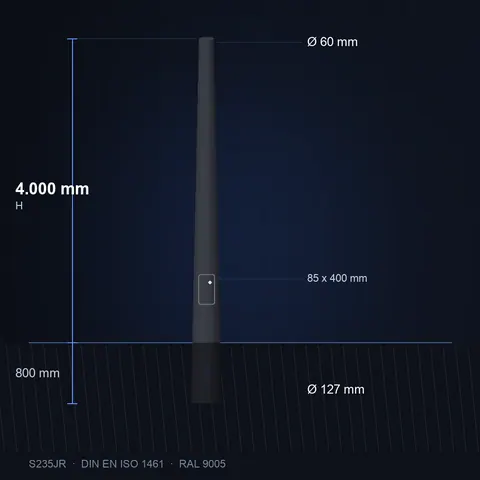 News
New: steel and aluminium lighting columns to the Dutch standard
Lichtplein now supplies conical steel lighting columns of 4 and 6 metres at a sharp price on request, plus aluminium columns of 3, 4 and 6 metres. With full dimensions on the product page, matching our street and post-top luminaires, delivered by truck.
8 October 2026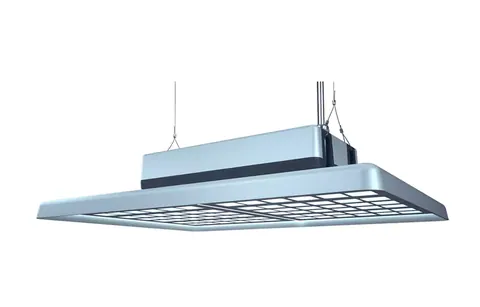 Knowledge
UFO or linear high bay: which one for your warehouse or hall
A high bay comes as a round UFO, as a linear luminaire above the racking aisle and as a flat panel with UGR<21. Which one you choose depends on mounting height, racking and the work done in the hall. This article gives the selection rules and a worked example for the number of luminaires.
8 October 2026