Ban on fluorescent tubes: what it means for replacement
Since 2023 most T5 and T8 fluorescent tubes may no longer be placed on the EU market as new products. Existing installations can keep running, but replacement needs a plan. These are the options for installers.
What has changed
The European RoHS directive restricts the use of mercury in electrical products. Fluorescent tubes contain mercury and were covered by an exemption for many years. That exemption lapsed in 2023 for the most widely used types: linear T5 and T8 tubes and compact fluorescent lamps without an integrated ballast.
Since then manufacturers may no longer place these lamps on the EU market as new products. Stock already held by wholesalers could still be sold, but that stock is now running out. The result: loose fluorescent tubes are becoming scarcer and more expensive, and for some lengths and colour temperatures there is simply no supply left.
What this means for existing installations
The ban applies to placing on the market, not to use. A luminaire fitted with fluorescent tubes may keep running for as long as the lamps work. You do not have to strip anything out.
The problem starts with the first failed tube. If no matching replacement can be sourced, part of the room stays dark. In a warehouse or car park, where lighting has a safety function, that is not an option. This is therefore the moment to plan replacement as a project rather than tube by tube.
Three ways to replace
In practice there are three routes:
- LED retrofit tube in the existing luminaire. Quick and cheap, but the old luminaire, the lampholders and the ballast stay in place. The ballast usually has to be bypassed, and after that conversion the responsibility for the safety of the luminaire generally rests with whoever carried out the conversion, no longer with the original manufacturer.
- New LED linear luminaire. The complete luminaire comes out and an LED linear luminaire goes in, often on the same fixing points. This gives the highest light output per watt, full warranty and the option to dim or add sensors.
- LED high bay in tall spaces. In halls of 6 metres and above, a row of fluorescent luminaires can often be replaced by fewer high bays with a targeted optic. That saves installation time and cabling.
What it delivers in figures
A conventional luminaire with two 58 W T8 tubes draws roughly 110 to 140 W including the ballast. An LED linear luminaire with comparable light output sits at 40 to 60 W. That is a saving of well over half, before any dimming is applied.
Modern LED luminaires achieve 140 to 180 lumens per watt. The TRIVO linear luminaires deliver 140 to 150 lm/W, the ATRIA high bays up to 180 lm/W. On top of that, these luminaires carry a warranty of up to 5 years, whereas a fluorescent tube is typically due for replacement after 15,000 to 20,000 operating hours.
The right choice for each space
- Car parks, livestock buildings, car washes and the food industry: choose a waterproof linear luminaire. TRIVO is IP65 or IP69K, through-wired and opens without screws, so you install a row of luminaires quickly. Available from 20 to 60 W, also with DALI-2 or a built-in sensor.
- Offices and retail: choose a light line with low glare. LINEA has UGR<21, joins seamlessly in white or black and is available as surface-mounted or pendant, optionally with indirect uplight. For office work the guideline is 500 lux on the working plane.
- Warehouses, production halls and sports halls: choose a high bay. ATRIA delivers 75 to 240 W as a UFO, linear above racking or flat with UGR<21. For storage 100 to 200 lux is common, for production work 300 to 500 lux.
How to approach a replacement project
First take stock of the number of luminaires, the mounting height, the IP requirement and whether dimming is needed. On that basis, have a lighting calculation made, so you know for certain that the new design meets the standard values, often with fewer luminaires than today. From 100 units we work with project prices and we deliver from European stock within 5 working days. Lichtplein sells to businesses only.
Frequently asked questions
May I still use my existing fluorescent tubes?
Yes. The ban applies to placing new lamps on the market, not to the use of existing installations. Replacement is becoming harder, however, because stocks are running out.
Is an LED retrofit tube not enough?
As a temporary fix it can work, but the old luminaire and wiring stay in place, the optic was not designed for LED and after conversion the responsibility for the safety of the luminaire generally rests with you. A new LED linear luminaire gives more light per watt and a full warranty.
Can I reuse the existing cabling and fixing points?
Usually yes. TRIVO linear luminaires are through-wired, so you connect a row of luminaires to a single supply. Do check that the circuit loading and the earth connection are in order.
How much energy do I save?
Expect roughly 50 to 60 percent compared with T8 on a conventional ballast. With an occupancy sensor or DALI-2 dimming that figure rises further in rarely used spaces.
Can I order as a private individual?
No, Lichtplein supplies businesses only. Installers and buyers apply for a business account and order at prices excluding VAT.
Browse the TRIVO and ATRIA ranges or request a quote for your replacement project straight away. Unsure about the number of luminaires? Have a lighting calculation made first.
Read also
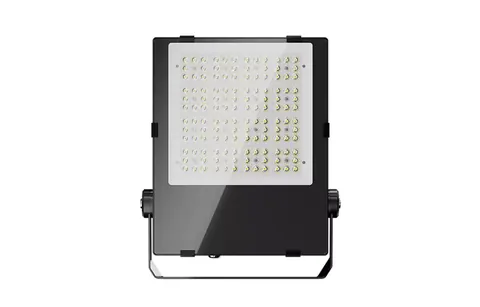 Knowledge
LED lighting before year end: KIA, EIA and planning for Dutch businesses
Many companies replace their lighting in the last months of the year. What the Dutch small-scale investment allowance (KIA) and energy investment allowance (EIA) can mean, what to watch out for and how to have the luminaires on site in time.
28 October 2026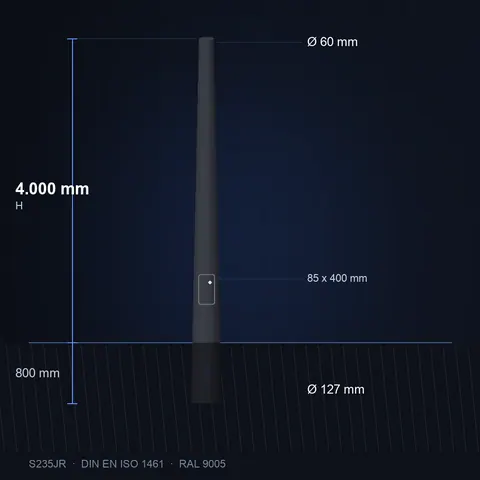 News
New: steel and aluminium lighting columns to the Dutch standard
Lichtplein now supplies conical steel lighting columns of 4 and 6 metres at a sharp price on request, plus aluminium columns of 3, 4 and 6 metres. With full dimensions on the product page, matching our street and post-top luminaires, delivered by truck.
8 October 2026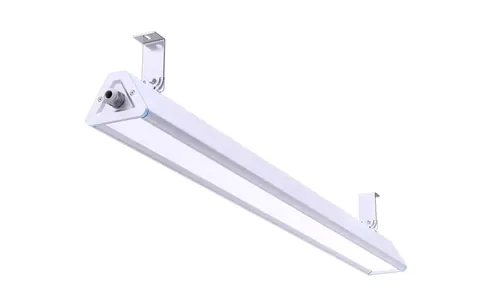 Worked examples
Worked example: a 4,000 m² warehouse from fluorescent to LED high bay
A fictional hall of 80 by 50 metres, 10 metres high, 200 lux required. Step by step we work out how many 150 W UFO high bays are needed, what that saves per year in kWh compared with fluorescent, and what sensors add on top.
8 October 2026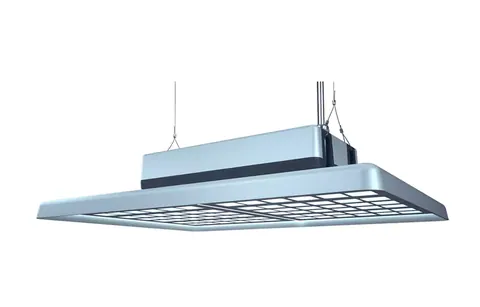 Knowledge
UFO or linear high bay: which one for your warehouse or hall
A high bay comes as a round UFO, as a linear luminaire above the racking aisle and as a flat panel with UGR<21. Which one you choose depends on mounting height, racking and the work done in the hall. This article gives the selection rules and a worked example for the number of luminaires.
8 October 2026