Genemuiden: site lighting at a manufacturing plant
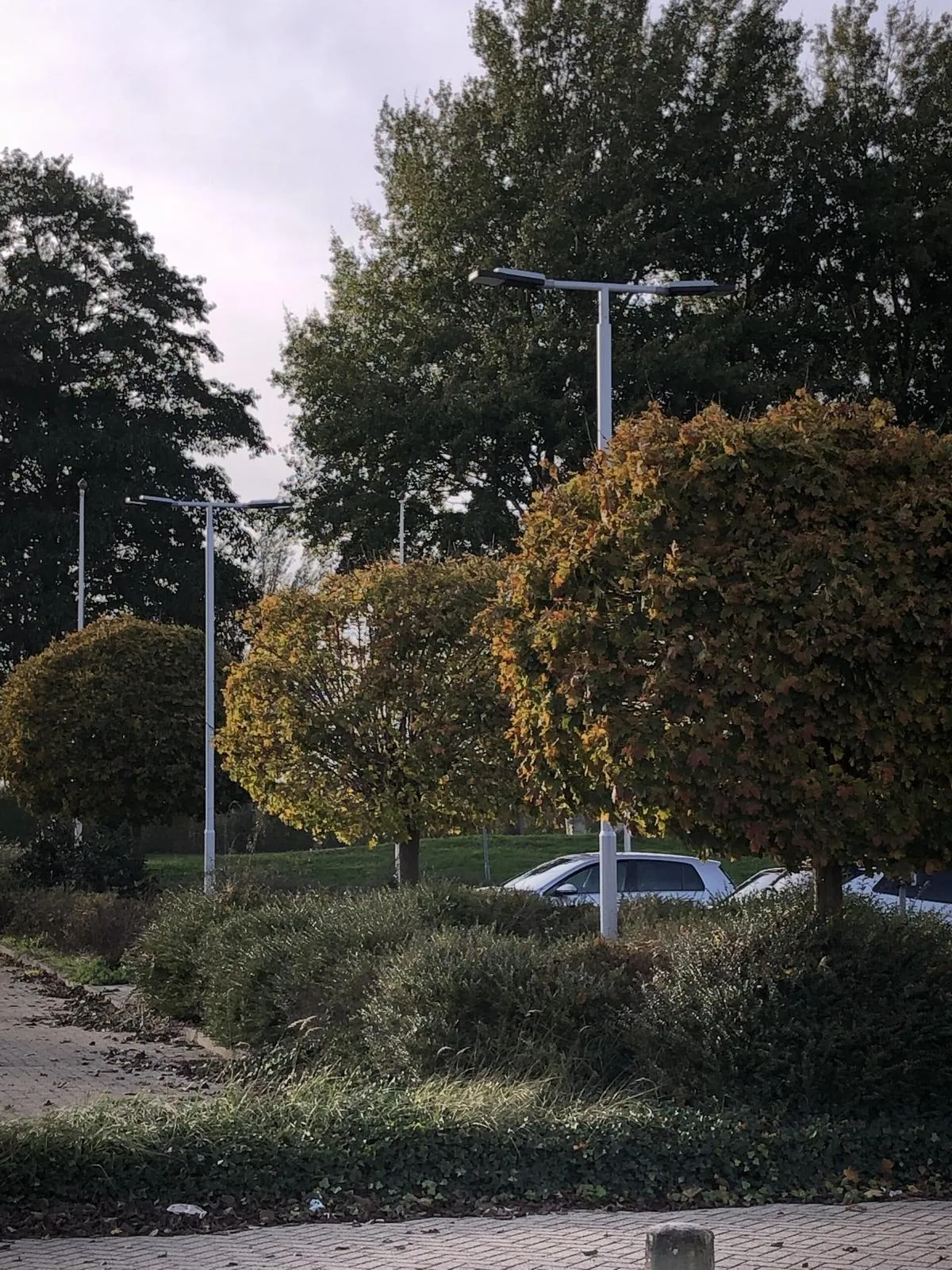
The yard of a manufacturing plant in Genemuiden received new LED luminaires on columns: functional light for logistics and safety, with little glare towards the surroundings. What was done there and how you build the same with VIA, FLUX and TURRIS.
A production site that keeps going after dark
Genemuiden, on the Zwarte Water, is a manufacturing town: production halls, storage and transport sit close together. At a manufacturing plant there, lorries enter and leave the yard during the dark hours to load, unload and turn. Forklifts cross the traffic routes and staff walk between the hall and the car park.
A yard like this makes two demands: enough, even light for logistics and safety, and as little light as possible over the site boundary.
What was done
The yard received new LED luminaires on columns, aimed at the traffic routes, the loading zone and the parking bays, with optics that keep the beam on the site. The result is functional light: drivers see the edge of the loading dock, the forklift driver sees the pedestrian, and the neighbours and the road receive no spill light or glare. The project was carried out by an installer, not by Lichtplein; we describe it as a reference for a comparable set-up with our range.
Which lighting levels to work to
The guide for outdoor workplaces is the European standard EN 12464-2. Rough indicative values, check the exact requirements for your situation in the standard:
- Traffic routes and lorry parking: 10 to 20 lux.
- Loading and unloading areas: 20 to 50 lux, with 50 lux where work is continuous.
- Passages and steps at the hall: around 50 lux.
Uniformity matters just as much (minimum divided by average illuminance). The standard sets a minimum per task, roughly between 0.25 and 0.40, so a driver does not pass from light into dark. You achieve that with the right column spacing, not with more watts.
Limiting glare towards the surroundings
Unlike indoors, where the UGR value describes glare, outdoors it is mainly the direction of the light that counts. Three choices keep the light on the site:
- Mounting angle 0°. A street luminaire with its glass horizontal emits almost nothing above the horizon.
- Directed optics. A street optic (type II or III) for traffic routes, a narrower beam for loading bays.
- Colour temperature 3000 to 4000 K. Warmer light is perceived as less intrusive; 4000 K gives good contrast at the workplace.
How to build this with the Lichtplein range
A comparable yard is set up with three series:
- VIA for traffic routes and parking bays: street luminaires from 25 to 100 W, IP66, with 10 kV surge protection, tiltable on a 60 mm spigot. With DALI-2 and D4i you control each column; with a DIP switch you set the output and with an AstroDIM driver a night setting.
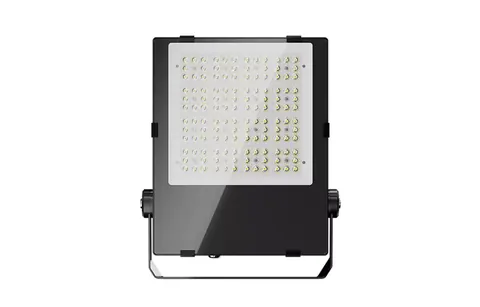
- FLUX for the loading zone: floodlights from 100 to 400 W, for example 240 W with 40,800 lumen at 150 lm/W, IP66 and IK10, on a bracket on the same column.
- TURRIS as the carrier: conical steel columns of 4 or 6 metres, hot-dip galvanised or powder coated in RAL 9005, with a door opening that takes the NEXUS column cut-out.
Column height, spacing and planning
On a yard with lorry traffic, 6 metres is a common mounting height: high enough to light over a trailer, low enough to keep the beam on the site. As a rule of thumb, column spacing for street luminaires is three to four times the mounting height, depending on the optic and the required uniformity; shorter at loading bays. The lighting calculation determines the final spacing. Steel columns have a lead time of 3 to 5 weeks; luminaires ship within 5 working days from European stock.
Frequently asked questions
How many lux do I need at a loading bay?
Allow 20 to 50 lux, with 50 lux where loading and unloading is continuous. For traffic routes 10 to 20 lux is sufficient. A lighting calculation shows whether you reach that with the chosen column height and spacing.
Can a street luminaire and a floodlight share one column?
Yes. The VIA luminaire slides onto the 60 mm spigot; a FLUX floodlight mounts on a bracket on the column. Check the total weight and wind load the column allows.
How do I avoid complaints from neighbours about the light?
Mount street luminaires horizontally (0°), choose an optic that matches the shape of the site and do not tilt floodlights steeply upwards. Dim to a night setting with DALI-2 or an AstroDIM driver once the last transport has been handled.
Did Lichtplein install this project itself?
No. Lichtplein supplies luminaires, columns and column cut-outs to installers and electrical contractors; installation is done by your own fitters or a partner. We supply businesses only.
What does a lighting calculation for a yard like this cost?
A lighting calculation costs 350 euro excl. VAT. You supply a drawing, a Google Maps image or the address; you receive the light levels and a proposal with luminaires, columns and quantities, so you know what you are ordering.
Let us prepare a lighting calculation on your site drawing, or request a quotation for columns and luminaires in one delivery. Lichtplein supplies businesses only.
Read also
 Knowledge
LED lighting before year end: KIA, EIA and planning for Dutch businesses
Many companies replace their lighting in the last months of the year. What the Dutch small-scale investment allowance (KIA) and energy investment allowance (EIA) can mean, what to watch out for and how to have the luminaires on site in time.
28 October 2026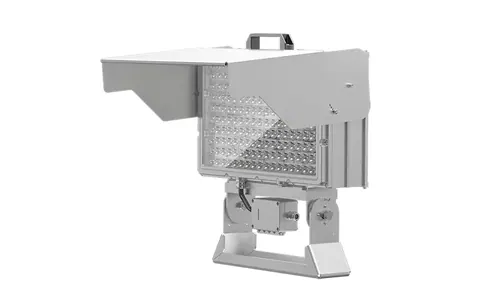 Knowledge
Site lighting for the dark months: checklist for business sites and car parks
Once the clocks go back it is dark by half past four, and the first and last hour of the working day happen in the dark. How to check your outdoor lighting now, fill the gaps and have the luminaires on site before the shortest days.
25 October 2026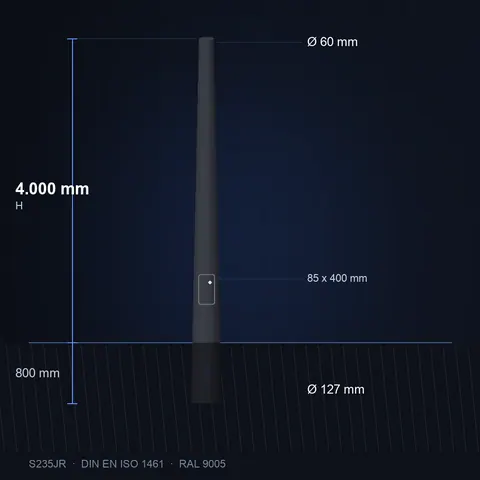 News
New: steel and aluminium lighting columns to the Dutch standard
Lichtplein now supplies conical steel lighting columns of 4 and 6 metres at a sharp price on request, plus aluminium columns of 3, 4 and 6 metres. With full dimensions on the product page, matching our street and post-top luminaires, delivered by truck.
8 October 2026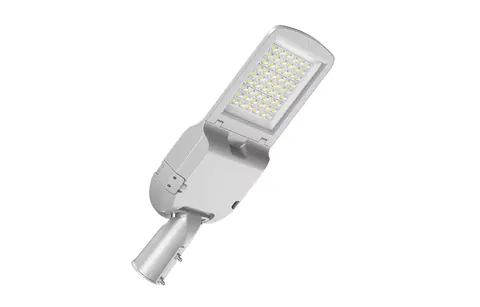 Knowledge
3000K, 4000K or 5000K: choosing colour temperature by application
Kelvin decides whether light looks warm, neutral or cool, and with it whether a street feels comfortable and a warehouse works well. We set out the right colour temperature for each application.
7 October 2026