Councils and charging infrastructure: the lighting column as a charging point
More and more residents without a driveway are requesting a public charging point, while the pavement is already full. Councils are therefore looking at the charging lamp post: lighting and two charging points in one column. These are the developments and the points to watch.
Demand for public charging points is growing
The share of electric cars in the vehicle fleet rises every year, and European policy to phase out the sale of new cars with combustion engines accelerates that. In residential areas with terraced houses and flats, most residents have no driveway of their own. They depend on a charging point in the public space.
Many councils combine charging on request, where a resident applies for a charging point, with proactive placement based on a plan map. Both routes end at the same bottleneck: there is no room left in the street for yet another object.
The pavement is full
A residential street already has lighting columns, waste containers, cycle stands, traffic signs and trees. Every additional charging post costs walking space, draws objections from residents and needs its own foundation, cable trench and connection. Managers of public space are therefore looking for ways to combine functions in objects that are already there.
The lighting column is the obvious candidate. It stands at a fixed spacing along the carriageway, often 25 to 35 metres in a residential street, it is already in the asset register and its position is aligned with parking bays and driveways.
The charging lamp post as a solution
A charging lamp post combines both functions: a street luminaire at the top, two charging points in the base. The CityCharger from our CIVIS series delivers 2x 11 kW from a double-walled, insulated aluminium column with a mounting height of 4 to 8 metres. The charging section is IP54 and IK10, so it withstands rain, knocks and a carelessly parked bicycle.
On top you fit a street luminaire from the VIA series or a post-top luminaire from the POLARIS series; the column top is matched to the luminaire per project. The lighting level stays as the lighting plan prescribes: for a residential street that is typically 5 to 7.5 lux on average. The price is on request, because height, colour, luminaire and connection differ per project.
First point to watch: the grid connection
The charging lamp post does not run on the public lighting cable. That network is designed for a few amps per column and in some municipalities is not live during the day. Two charging points of 11 kW together draw 22 kW, roughly 32 A per phase, and therefore need their own three-phase connection from the grid operator.
Because of grid congestion, the lead time for that connection can be longer than the delivery time of the column. Apply for the connection at the same time as you order the column. The column supports load balancing (among other things via RS485): it shares the available power between both charging points, so even a tight connection can serve both points.
Second point to watch: permits and the traffic order
A charging lamp post replaces an existing column in the same position. That is a simpler process than a new object in a new place: ground conditions, cable route and sight lines are known. Designating parking bays as charging bays does require a traffic order from the road authority, with the associated objection period.
Coordinate early with the manager of the public lighting and with the party that holds the charging concession. Together they decide which column positions qualify and who takes the column into management.
Third point to watch: management and ownership
In the charging lamp post, lighting and charging are two separate circuits with their own protection. The lighting stays on the lighting network, with its own column cut-out such as those in our NEXUS series; the charging section communicates via OCPP 1.6 (JSON) with the platform of the charge point operator. That operator handles billing, fault reports and software updates.
Agree in advance who owns the column, who maintains the luminaire and who settles the damage after a collision. Without those agreements a fault can sit unresolved for a long time, because both parties wait for each other.
Frequently asked questions
Can an existing lighting column be converted into a charging lamp post?
No. The charging lamp post is a complete column with an insulated interior and its own connection compartment. You replace the column in the same position; the existing luminaire can possibly be reused, depending on the column top.
How many cars can charge at the same time?
Two, each at up to 11 kW. With load balancing the power is shared automatically when the connection is tight.
Who is the point of contact for a charging fault?
The charge point operator, via the OCPP platform. Lichtplein supplies the column; faults in charging sessions go through the operator contracted by the council or the owner.
What is the delivery time of a charging lamp post?
The charging lamp post is supplied on a project basis; for aluminium columns we usually allow 4 to 6 weeks. You receive the current delivery time with your quotation. The grid connection often takes longer; apply for it in parallel.
Does Lichtplein also supply private individuals or owners' associations?
No, only businesses, installers and councils. An owners' association orders through its installer or managing agent.
Would you like to know which column positions in your area are suitable for a charging lamp post? Request a project price via our quotation page or view the complete CIVIS series.
Read also
 News
New: steel and aluminium lighting columns to the Dutch standard
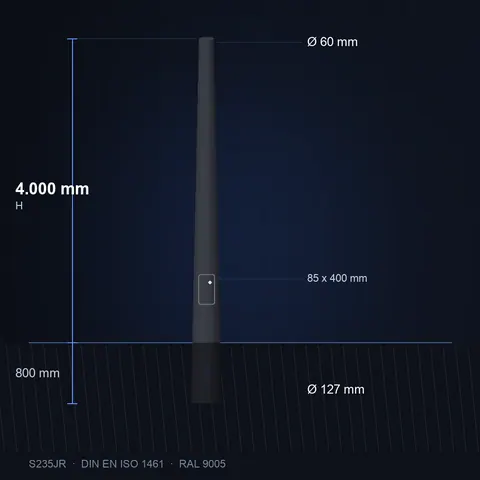
Lichtplein now supplies conical steel lighting columns of 4 and 6 metres at a sharp price on request, plus aluminium columns of 3, 4 and 6 metres. With full dimensions on the product page, matching our street and post-top luminaires, delivered by truck.
8 October 2026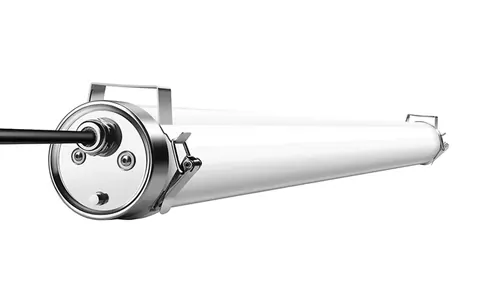 News
Ban on fluorescent tubes: what it means for replacement
Since 2023 most T5 and T8 fluorescent tubes may no longer be placed on the EU market as new products. Existing installations can keep running, but replacement needs a plan. These are the options for installers.
6 October 2026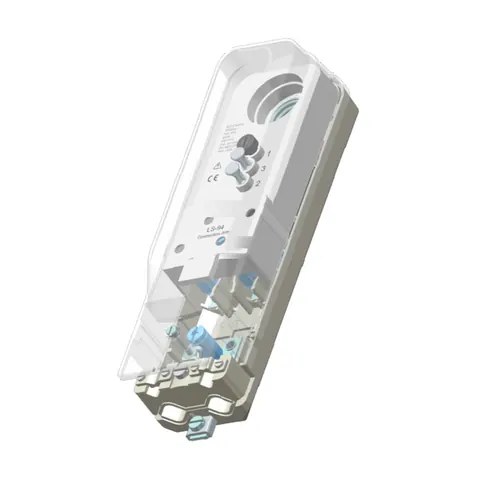 News
New: column connection boxes, fuses and earth braids in the NEXUS line
Lichtplein now also supplies what belongs behind the door of a lighting column: LS94 connection boxes to the Dutch standard, for one or two fuses, porcelain screw caps, fuse cartridges of 2, 4 and 6 A and earth braids. A column now fits completely into a single quote.
4 October 2026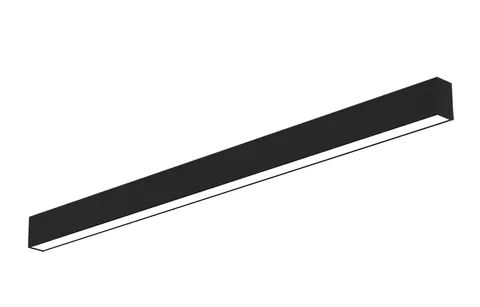 News
The standard for office lighting: what EN 12464-1 requires
The current version of EN 12464-1 asks for more than 500 lux on the desk. Walls, ceiling, cylindrical illuminance, flicker and the non-visual effect of light all count. Here is what that means for your office and industrial projects.
2 October 2026