Type II and type III light distribution: optics for street lighting
The optic decides whether the light lands on the cycle path, across the full carriageway or in the neighbours' garden. Here is how to read the IES types and match the distribution to mounting height and road width.
What an IES type says about the light distribution
A street luminaire does not have a round beam like a floodlight but an optic that spreads the light deliberately over the road surface. How wide that spread is, is described by the IES types I to V, a classification from the American lighting standards that European manufacturers and lighting calculation software use as well. The yardstick is the mounting height: a Type II throws its light across the road up to roughly 1.75 times the mounting height, a Type III up to 2.75 times and a Type IV further still. Type I is a narrow two-way distribution for a luminaire centred above a path, Type V is symmetrical all round.
On a 6 metre column a Type II therefore covers a carriageway up to roughly 10 metres wide, a Type III up to about 16 metres. A second designation, Short, Medium or Long, says how far the light reaches along the road. The VIA series offers both main types: Type II for narrow profiles, Type III for carriageways.
Type II: cycle paths, footpaths and narrow streets
Type II suits profiles where the column stands close to the edge and the road is narrow: cycle paths, pedestrian routes, residential paths and single-lane streets. The light is stretched along the path rather than thrown wide to the front, so little of it lands in the verge or in adjoining gardens. That matters most at 4 metres, where every metre of sideways spill ends up with the neighbours straight away.
For cycle paths under the P classes of EN 13201 (P3 average 7.5 lux, P4 average 5 lux) the minimum value between two columns is the limiting factor. A Type II can keep it up at spacings of roughly 20 to 30 metres on a 4 metre column, depending on path width and luminous flux; a lighting calculation gives the final answer. The VIA series offers the 25 W luminaire with 1,500 lm and Type II Short for this, matched to 4 metres, and the adjustable 20 to 50 W luminaire with 6,750 lm for wider paths and narrow streets.
Type III: residential streets, access roads and business parks
As soon as the carriageway has two lanes or parking bays along it, a Type II is too narrow and the far side stays dark. Type III throws the light further forward and is the standard choice for residential streets, access roads, internal roads on business parks and loading zones, usually on a 6 metre column.
For carriageways, EN 13201 works with M classes based on luminance, for example 0.75 cd/m² for M4 and 0.5 cd/m² for M5, with an overall uniformity Uo of 0.35 to 0.40. A Type III at 6 metres generally achieves that at spacings of 25 to 35 metres with 50 to 100 W, depending on road width and the reflectance of the road surface. The VIA series offers Type III in the luminaires up to 40 W with separate driver and in the DALI-2 version with D4i; for carriageways at 6 metres there are also luminaires of 50 to 100 W. The VIA luminaires are rated IP66, have 10 kV surge protection and reach up to 160 lm/W.
Car parks: symmetrical or asymmetrical
A car park is not a road but an area. If the column stands in the middle of the site, an all-round symmetrical distribution (Type V) is the most efficient: a post-top luminaire from the POLARIS series or two street luminaires on a double bracket. If the columns stand along the edge, you want a strongly forward-throwing distribution: Type IV, or an asymmetrical floodlight from the FLUX series that reaches the whole area without wasting light behind the column.
EN 12464-2 gives as a guide 5 lux for light traffic, 10 lux for medium and 20 lux for heavy traffic, with a uniformity of 0.25. Because that requirement is lower than on a carriageway, you get by with fewer columns; at 6 metres, spacings of up to about 35 metres are common.
Short, Medium, Long: the link with column spacing
With Short, the point of maximum intensity lies at 1 to 2.25 times the mounting height along the road, with Medium at 2.25 to 3.75 times and with Long at 3.75 to 6 times. The further out that point lies, the larger the spacing, but also the flatter the light strikes the road surface and the sooner a road user looks into the light source. On roads, glare is assessed with the threshold increment TI, not with UGR as in halls.
In practice: Short for paths and residential streets, Medium for carriageways where the number of columns matters. As a rule of thumb the spacing is 5 to 7 times the mounting height on paths and 4 to 6 times on carriageways; a wider and longer optic reaches the higher factor. Change the optic and you also change the number of columns from the TURRIS series, the cable length and the number of column connection boxes from the NEXUS series.
Limiting spill light: tilt angle, shielding and dimming
The optic only works if the luminaire is mounted level. With flat glass and a tilt angle of 0° no light goes above the horizon (ULOR 0 %) and the cut-off stays sharp. Every degree of tilt added to reach the far side also pushes light towards facades and sky; in that case choose a Type III rather than a tilted Type II. The luminaires in the VIA series tilt on the 60 mm spigot, so on a column that stands slightly out of plumb you set them back to horizontal.
Three further measures help:
- a backlight shield for columns directly alongside gardens or bedrooms
- warm white light of 2700 K or 3000 K along nature, water and housing
- dimming late at night via AstroDIM, dipswitch or DALI-2, for example to 50 % between 23:00 and 06:00
In dark environmental zones (E1 and E2 in the CIE classification) the permitting authority often sets requirements for this. A lighting calculation shows per column how many lux fall on the neighbours' facade before the first column goes into the ground. Lichtplein supplies to businesses only; prices are excl. VAT.
Frequently asked questions
What is the difference between Type II and Type III?
The width of the light pool across the road: Type II up to roughly 1.75 times the mounting height, Type III up to 2.75 times. At 6 metres that is roughly 10 versus 16 metres of road width.
Can I use a Type III luminaire on a cycle path?
You can, but a large share of the light then falls beside the path into the verge or the gardens. On a cycle path 3 to 4 metres wide, Type II is more efficient and produces less spill light.
What does Short mean in Type II Short?
That the maximum intensity lies close to the column, at 1 to 2.25 times the mounting height. That keeps glare low and suits the column spacings of paths.
Which optic do I choose for a car park?
Columns in the middle of the site: symmetrical (Type V). Columns along the edge: Type IV or an asymmetrical floodlight. A lighting calculation shows which variant reaches 10 lux with the fewest columns.
Browse the street luminaires with Type II and Type III optics in the VIA series, or let us work out in a lighting calculation which distribution and column spacing your profile needs.
Read also
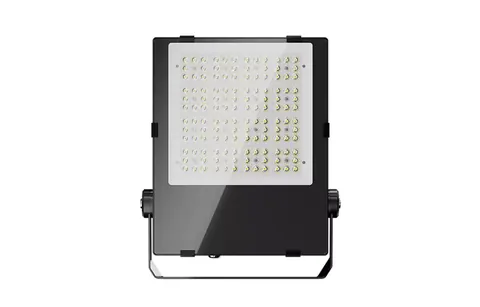 Knowledge
LED lighting before year end: KIA, EIA and planning for Dutch businesses
Many companies replace their lighting in the last months of the year. What the Dutch small-scale investment allowance (KIA) and energy investment allowance (EIA) can mean, what to watch out for and how to have the luminaires on site in time.
28 October 2026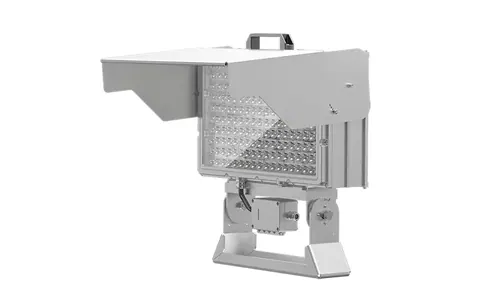 Knowledge
Site lighting for the dark months: checklist for business sites and car parks
Once the clocks go back it is dark by half past four, and the first and last hour of the working day happen in the dark. How to check your outdoor lighting now, fill the gaps and have the luminaires on site before the shortest days.
25 October 2026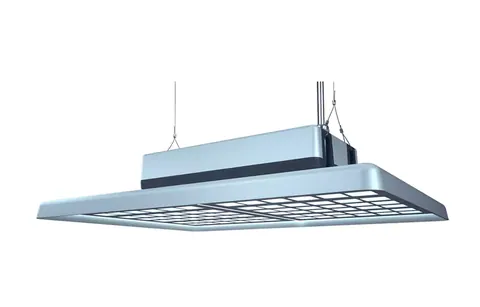 Knowledge
UFO or linear high bay: which one for your warehouse or hall
A high bay comes as a round UFO, as a linear luminaire above the racking aisle and as a flat panel with UGR<21. Which one you choose depends on mounting height, racking and the work done in the hall. This article gives the selection rules and a worked example for the number of luminaires.
8 October 2026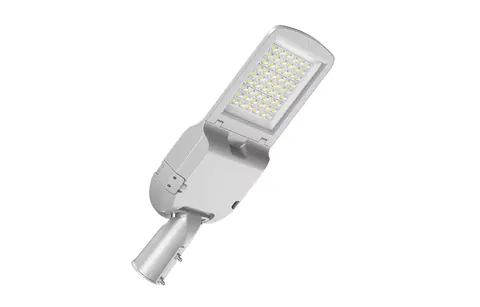 Knowledge
3000K, 4000K or 5000K: choosing colour temperature by application
Kelvin decides whether light looks warm, neutral or cool, and with it whether a street feels comfortable and a warehouse works well. We set out the right colour temperature for each application.
7 October 2026