Spring clamp or screw terminal in wiring accessories: which to choose
A switch or socket outlet is connected with either a spring clamp or a screw terminal. That difference decides how fast you install, which conductor you can use and how the connection holds up over the years. Here are the pros and cons and which Lichtplein range uses which system.
Two ways to secure a conductor
Behind every switch, dimmer and socket outlet sits the same task: a copper conductor has to press against a live part with sufficient contact pressure for years. With a screw terminal you tighten a screw that clamps the conductor directly or via a pressure plate. With a spring clamp (also called a push-in terminal) you push the stripped conductor into an opening, after which a steel spring presses it against the busbar.
Both systems are standardised and safe, provided you use them for what they are designed for. The difference lies in installation time, the type of conductor, releasing the wire and how the connection behaves over the years.
Installation speed: where the gain is
With a spring clamp the connection takes two actions: strip to the indicated length and push in. No screwdriver, no tightening, no doubt about whether the screw is really tight. With a screw terminal you add loosening, inserting and tightening for each conductor, plus a brief pull test.
That saves a few seconds per connection, but it adds up. A worked example: a house with 60 switch and socket points and an average of three conductors per point comes to 180 connections. At 10 seconds saved per conductor that is half an hour per house, and 20 hours across a project of 40 houses.
The second gain is in checking. A spring clamp is either right or wrong: the conductor is pushed in to the stop or it is not. With a screw terminal the quality depends on the tightening torque, and that is not always consistent at the end of a working day.
Reliability: contact pressure over the years
Copper deforms slowly under pressure. A screw terminal that was tight on installation can gain a little play after years of heating and cooling: the contact pressure drops, the contact resistance rises and the joint runs warmer. That is why retightening screw terminals in distribution boards is a well-known maintenance item. Behind a switch in a flush box that hardly ever happens, so there the installation has to be right first time.
A spring clamp maintains its own contact pressure: the spring follows the conductor as it settles. Spring clamps are therefore not very sensitive to vibration and temperature changes and do not need retightening. A properly tightened screw terminal on solid conductor also lasts for decades (apply the tightening torque specified by the manufacturer, usually below 1 Nm for wiring accessories), but a spring clamp leaves less room for an installation error.
Solid or flexible conductor
This is the most important practical difference. A push-in terminal is designed for solid conductor: the single-core 1.5 or 2.5 mm² wire that is drawn into conduit in Dutch housing. A solid conductor is stiff enough to push the spring open and then stays straight in the clamp.
Flexible conductor (fine-stranded, as in flex cords) cannot simply be pushed into a push-in terminal: the fine strands splay out and the spring grips them poorly. Flexible conductor only works with a ferrule, and only if the terminal datasheet permits it. A screw terminal accepts solid and flexible conductor without further ado, although a ferrule on fine-stranded copper is the neat solution there too.
Rule of thumb: housing and renovation with solid single-core wire, choose spring clamps with confidence. If you work a lot with flexible conductor, for example surface-mounted installations with flex, a screw terminal or a spring clamp with ferrules is more convenient.
Releasing and reuse
A screw terminal can be loosened and retightened as often as you like; the conductor goes back in unchanged. With a spring clamp you release the conductor through the release opening: press the spring in with a small screwdriver and pull the conductor out.
The clamped part of the conductor usually shows a slight impression of the spring afterwards. Cut off the end and strip it again before reinserting. That costs a few centimetres of wire, so allow enough length in the flush box. In a refurbishment where switches are moved several times, a screw terminal is slightly more forgiving.
Which range has what: Liregus Modern and Liregus Alfa
Lichtplein carries two ranges of wiring accessories from the Lithuanian manufacturer Liregus (since 1944), each with its own connection system.
- Liregus Modern uses spring clamps. The premium range: flat, matt wiring accessories with slim cover frames in matt white, matt black, matt sand and champagne. 157 items, including dimmers, USB socket outlets and CAT6a network outlets. The earthed socket outlet is also available in Liregus Modern with screw terminals; the connection system is listed per item in the specifications and in the Liregus datasheet on the product page. For homes, hotels and offices where you install right first time and never go behind the plate again.
- Liregus Alfa uses screw terminals. The basic wiring accessories for construction and renovation: 115 items in white and sand, with and without cover frame, flush and surface mounted. Familiar, robust and suitable for solid and flexible conductor.
In price the ranges are close together: a single-pole switch costs around 10 euros in Liregus Alfa and around 12 euros in Liregus Modern excl. VAT, and a single cover frame starts at 1 and 2 euros respectively. The difference is in finish, colour choice and breadth of range, not in the basic switch.
Many installers combine them: Liregus Alfa in storerooms, meter cupboards and plant rooms, Liregus Modern in living and representative spaces. The wiring accessories of both ranges are IP20 for dry indoor areas and ship from European stock within 5 working days, to businesses only, with project prices from 100 pieces.
Frequently asked questions
Can I use flexible conductor in the Liregus Modern spring clamp?
Only with a ferrule and only if the datasheet of the item concerned permits it. Solid single-core 1.5 and 2.5 mm² wire goes straight in.
Do I need to retighten screw terminals behind a switch?
In practice that hardly ever happens, because the plate is not opened again. So apply the correct tightening torque on installation and give each conductor a brief pull test.
How much insulation do I strip for a spring clamp?
Follow the strip length indicated on the product or in the datasheet, usually 10 to 12 mm for spring clamps. Too short gives poor contact, too long leaves bare copper outside the clamp.
Can I combine Liregus Modern and Liregus Alfa in one project?
Yes, that is common: Liregus Alfa in plant rooms and storerooms, Liregus Modern in visible spaces. Keep to one range per room, because cover frames and appearance differ between ranges.
View the complete wiring accessories of Liregus Modern and Liregus Alfa, or open a business account and request a quotation for your project.
Read also
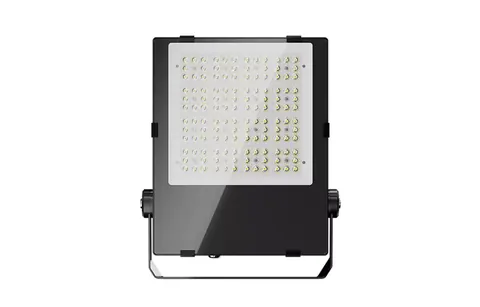 Knowledge
LED lighting before year end: KIA, EIA and planning for Dutch businesses
Many companies replace their lighting in the last months of the year. What the Dutch small-scale investment allowance (KIA) and energy investment allowance (EIA) can mean, what to watch out for and how to have the luminaires on site in time.
28 October 2026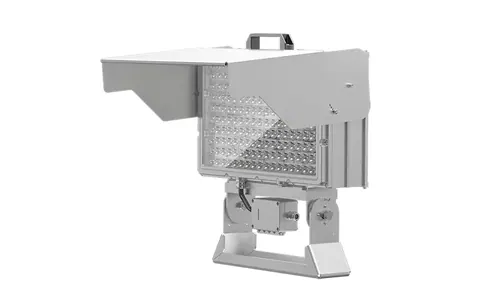 Knowledge
Site lighting for the dark months: checklist for business sites and car parks
Once the clocks go back it is dark by half past four, and the first and last hour of the working day happen in the dark. How to check your outdoor lighting now, fill the gaps and have the luminaires on site before the shortest days.
25 October 2026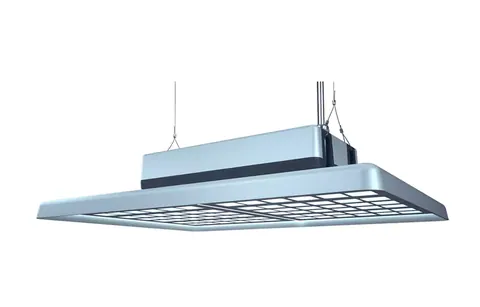 Knowledge
UFO or linear high bay: which one for your warehouse or hall
A high bay comes as a round UFO, as a linear luminaire above the racking aisle and as a flat panel with UGR<21. Which one you choose depends on mounting height, racking and the work done in the hall. This article gives the selection rules and a worked example for the number of luminaires.
8 October 2026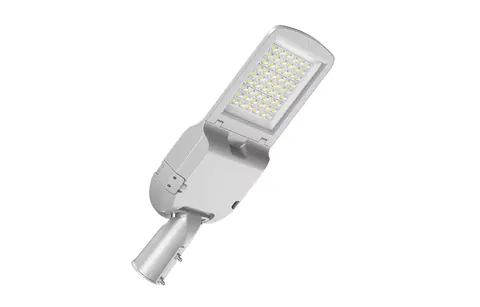 Knowledge
3000K, 4000K or 5000K: choosing colour temperature by application
Kelvin decides whether light looks warm, neutral or cool, and with it whether a street feels comfortable and a warehouse works well. We set out the right colour temperature for each application.
7 October 2026